
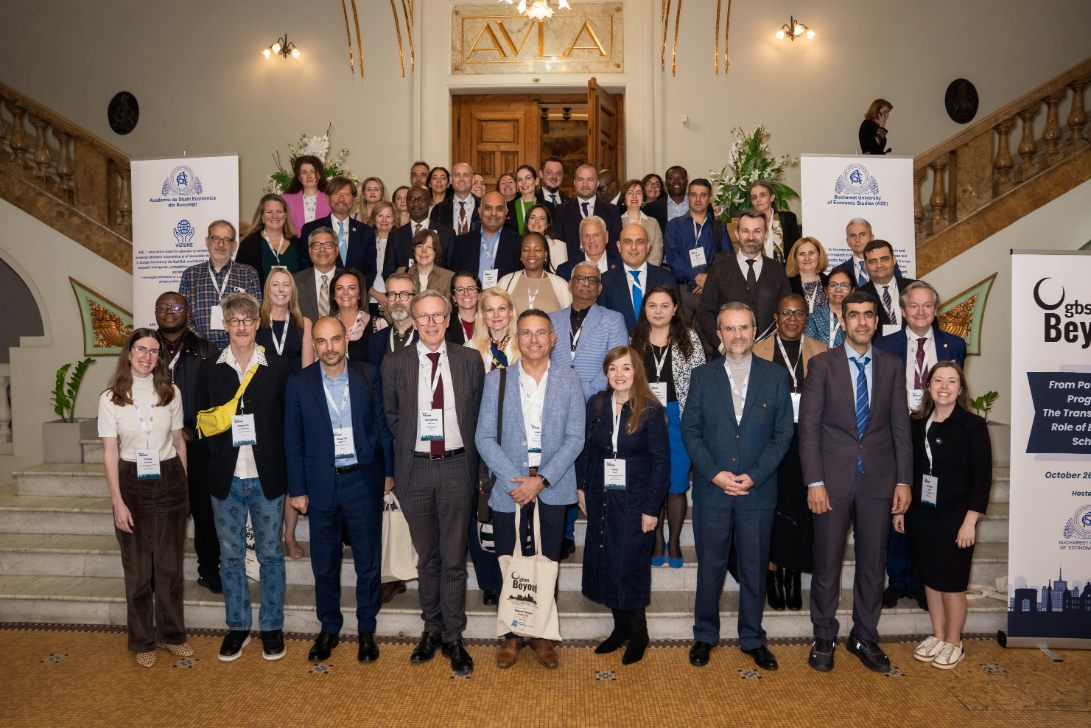
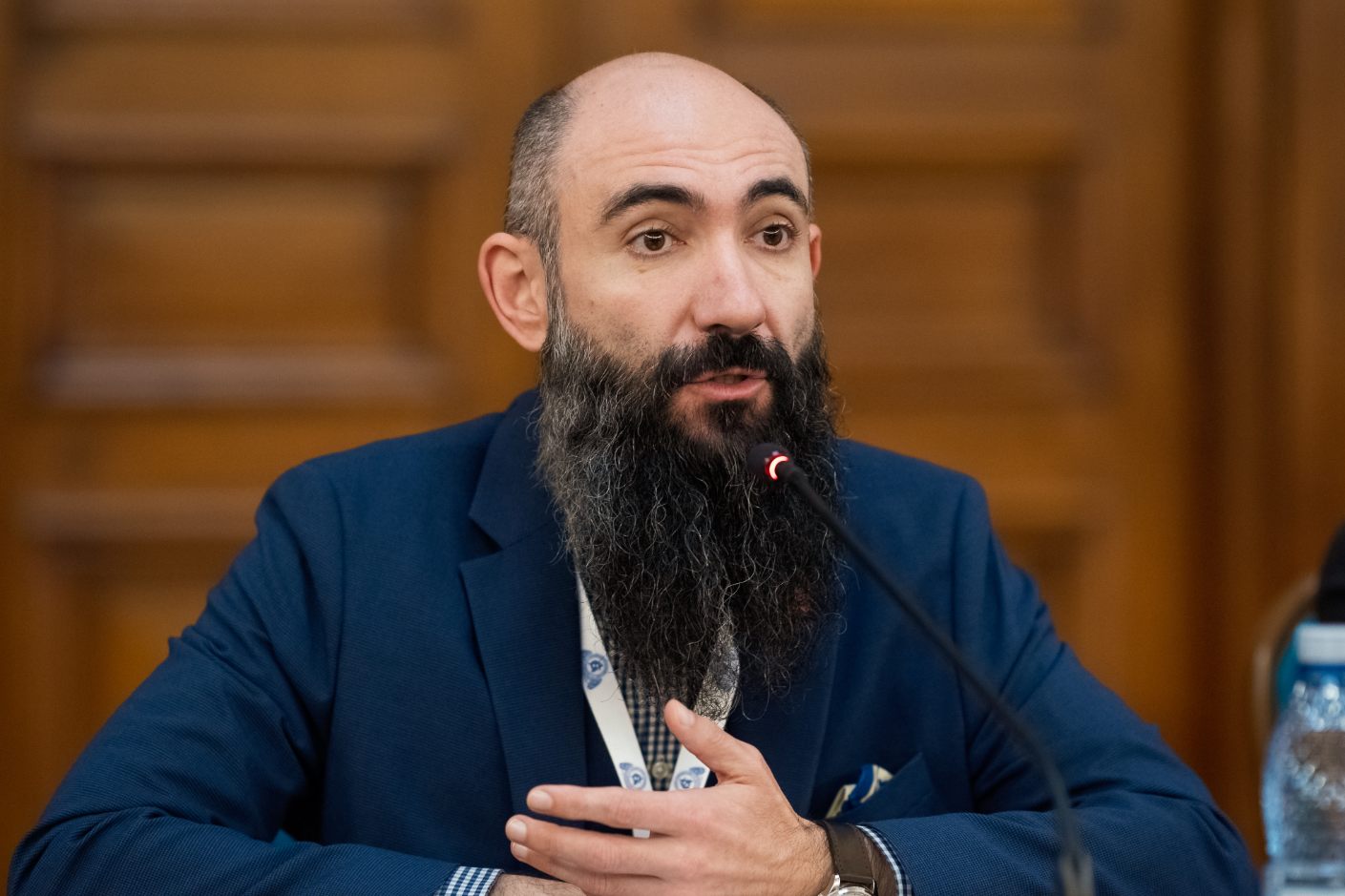
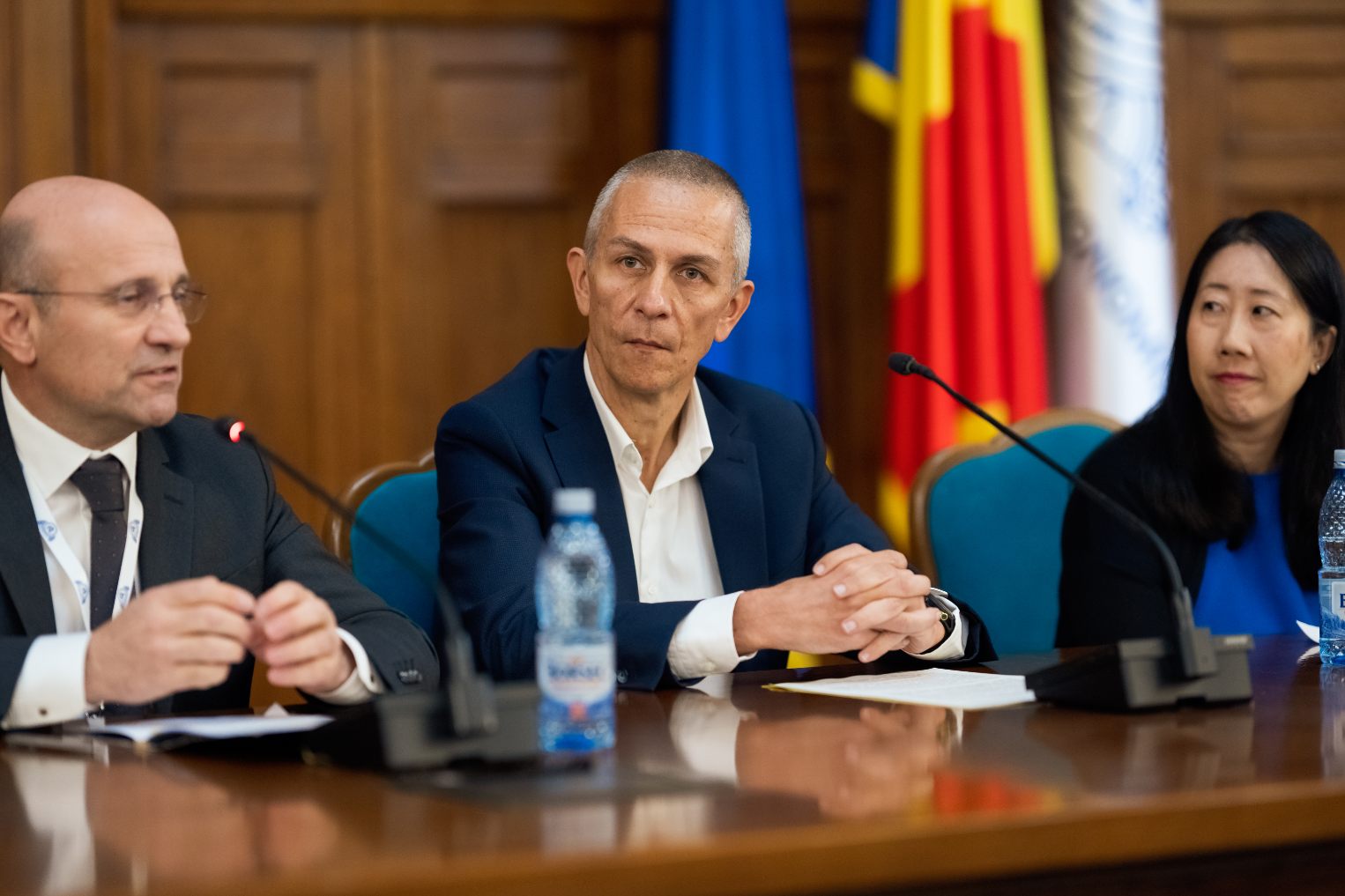
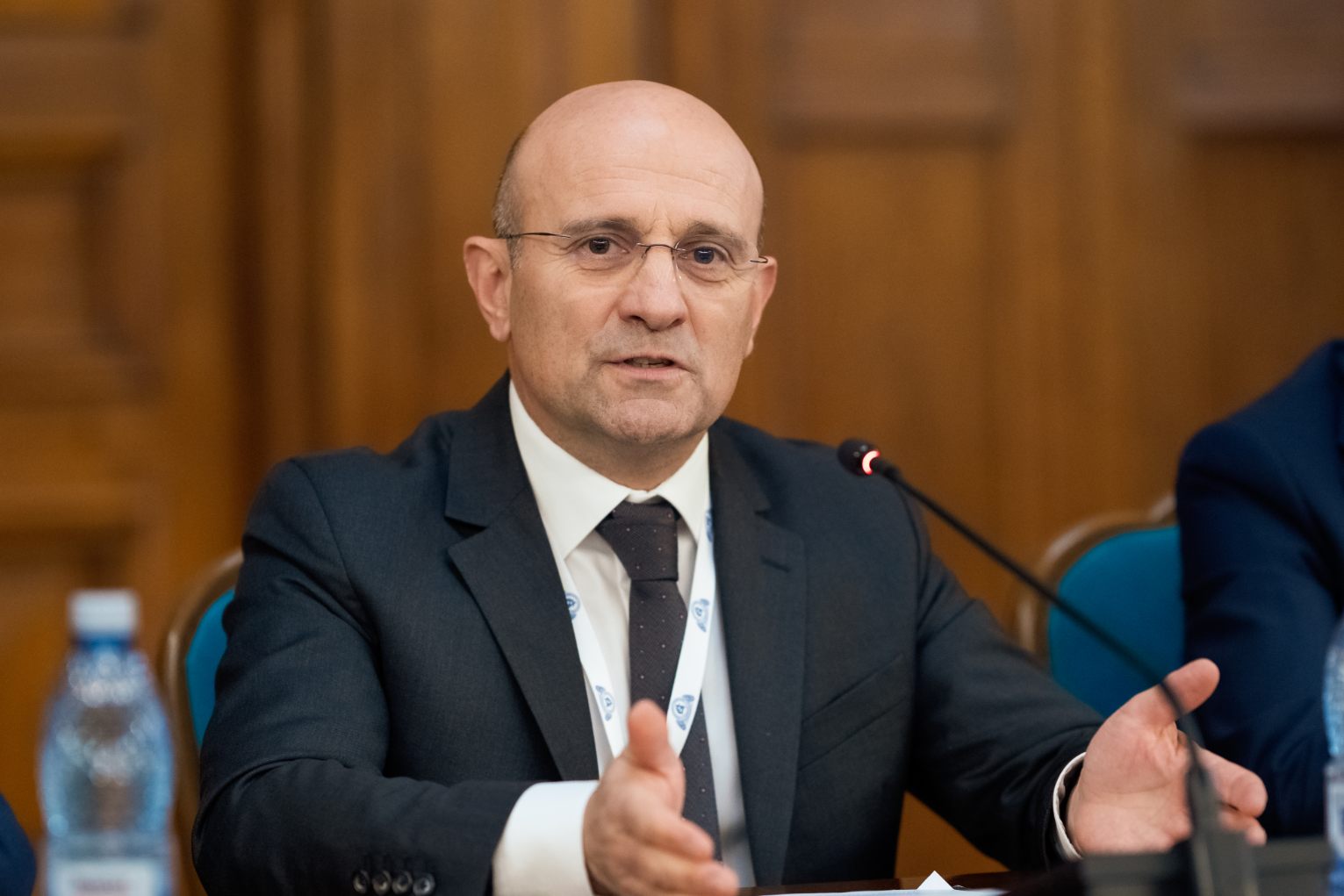
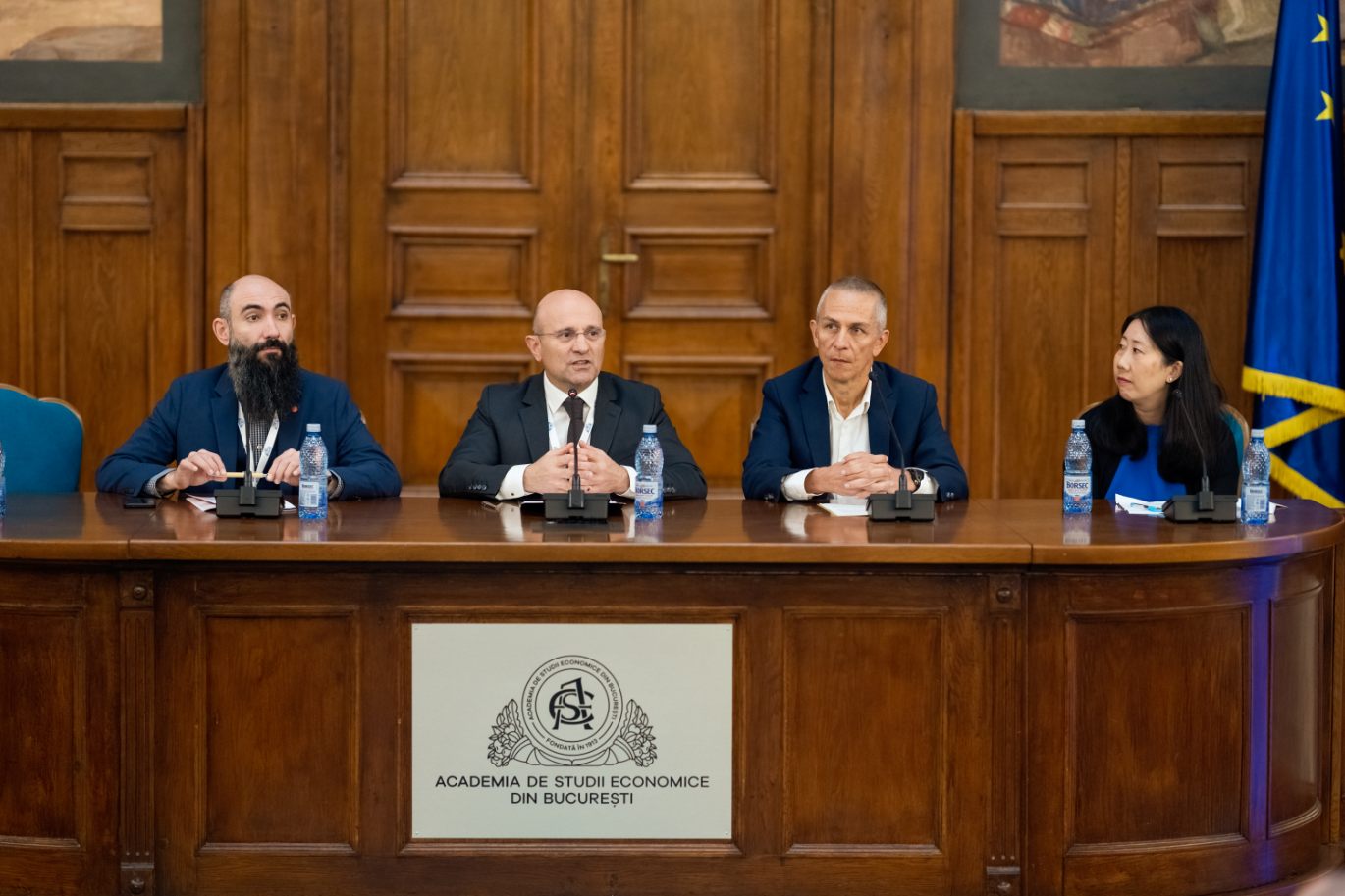
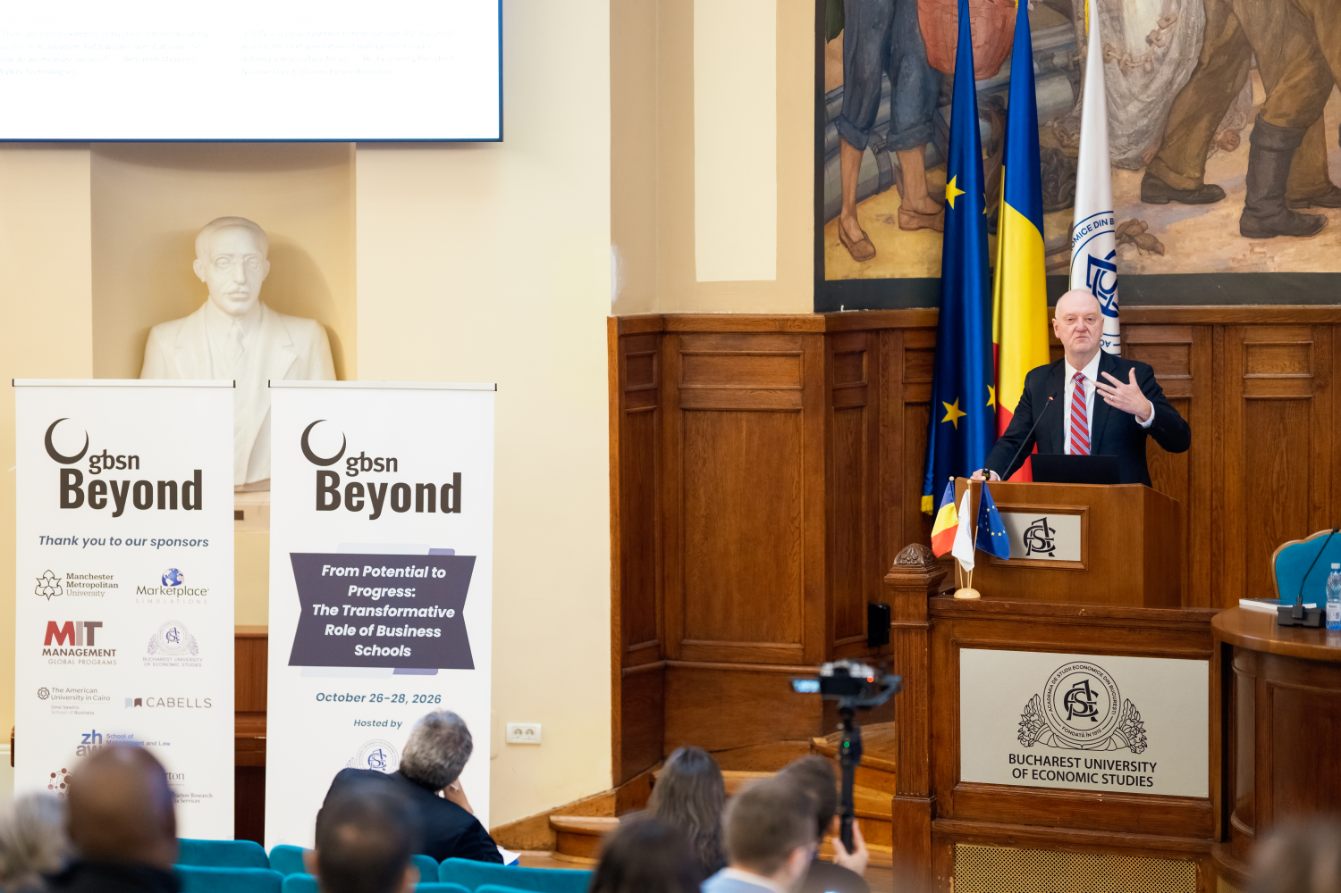
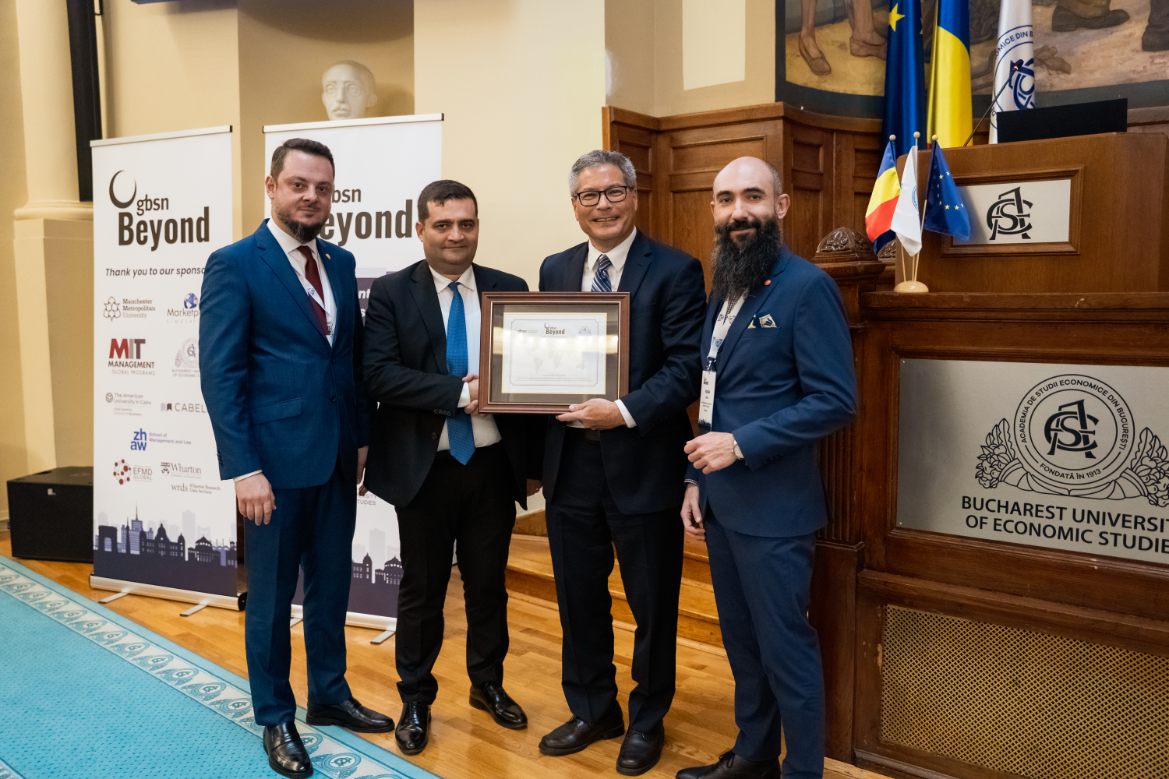
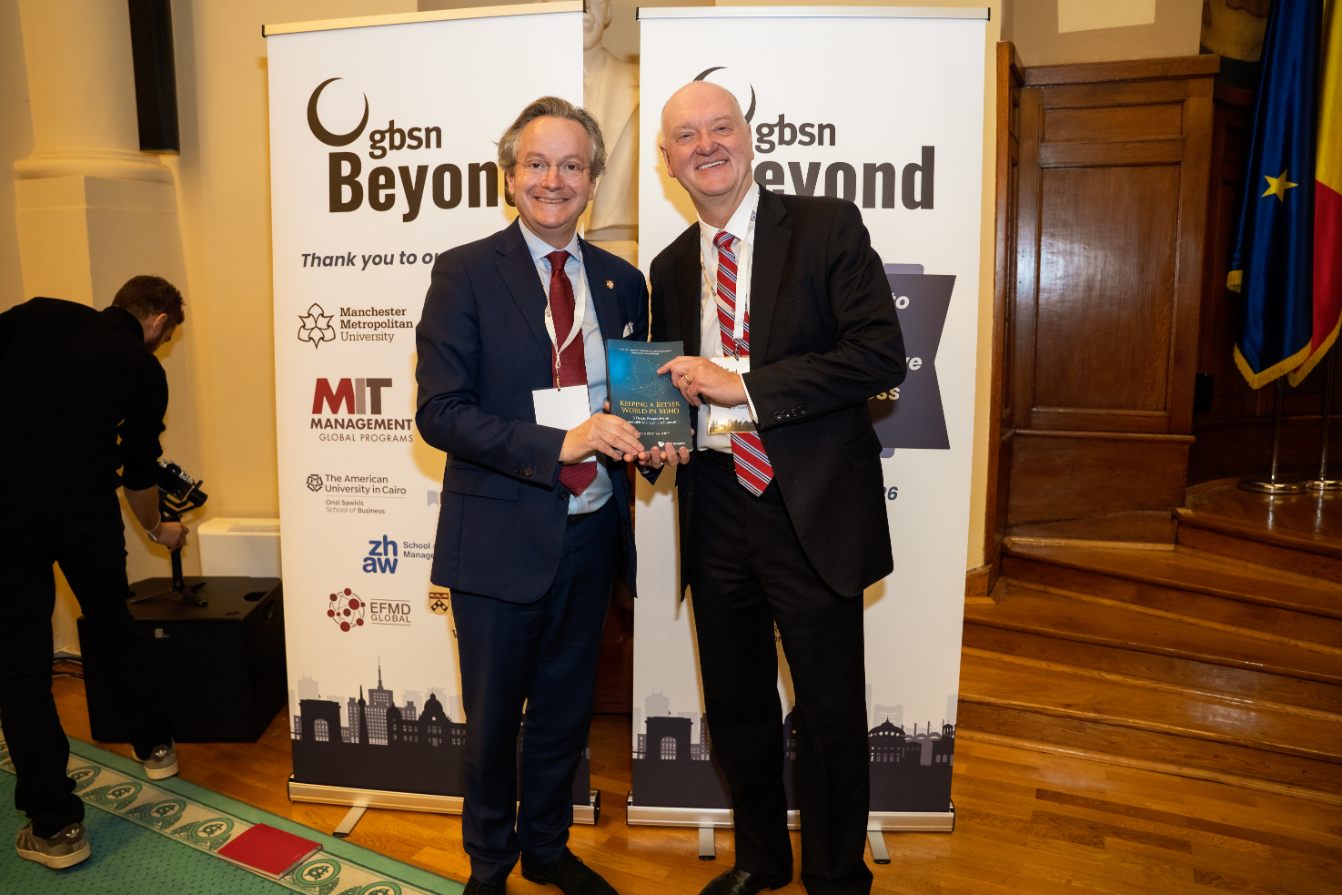
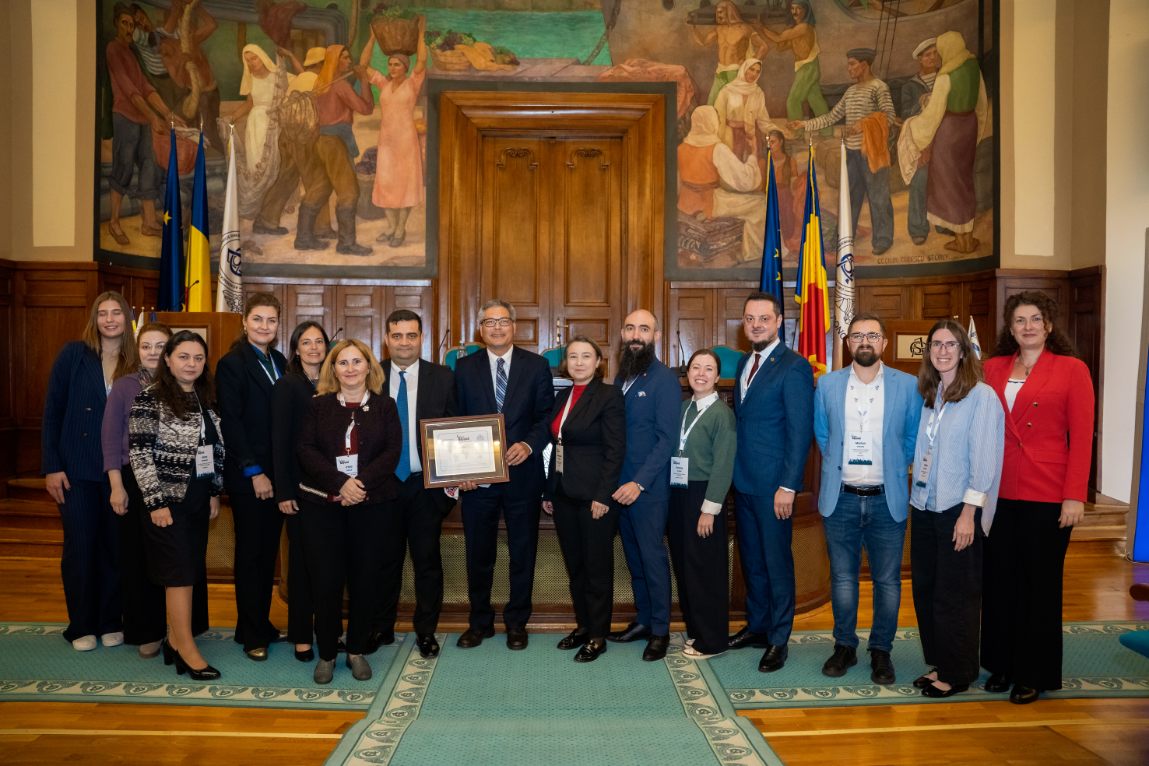
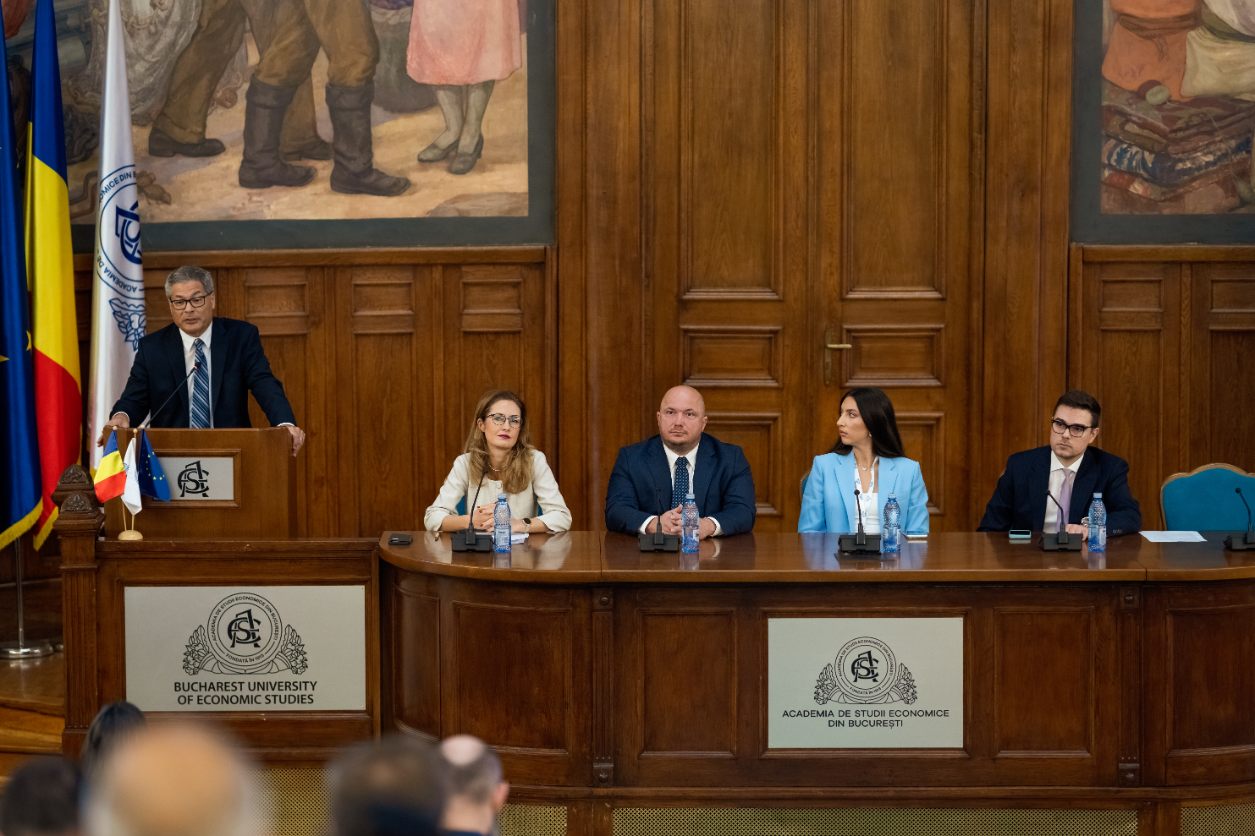
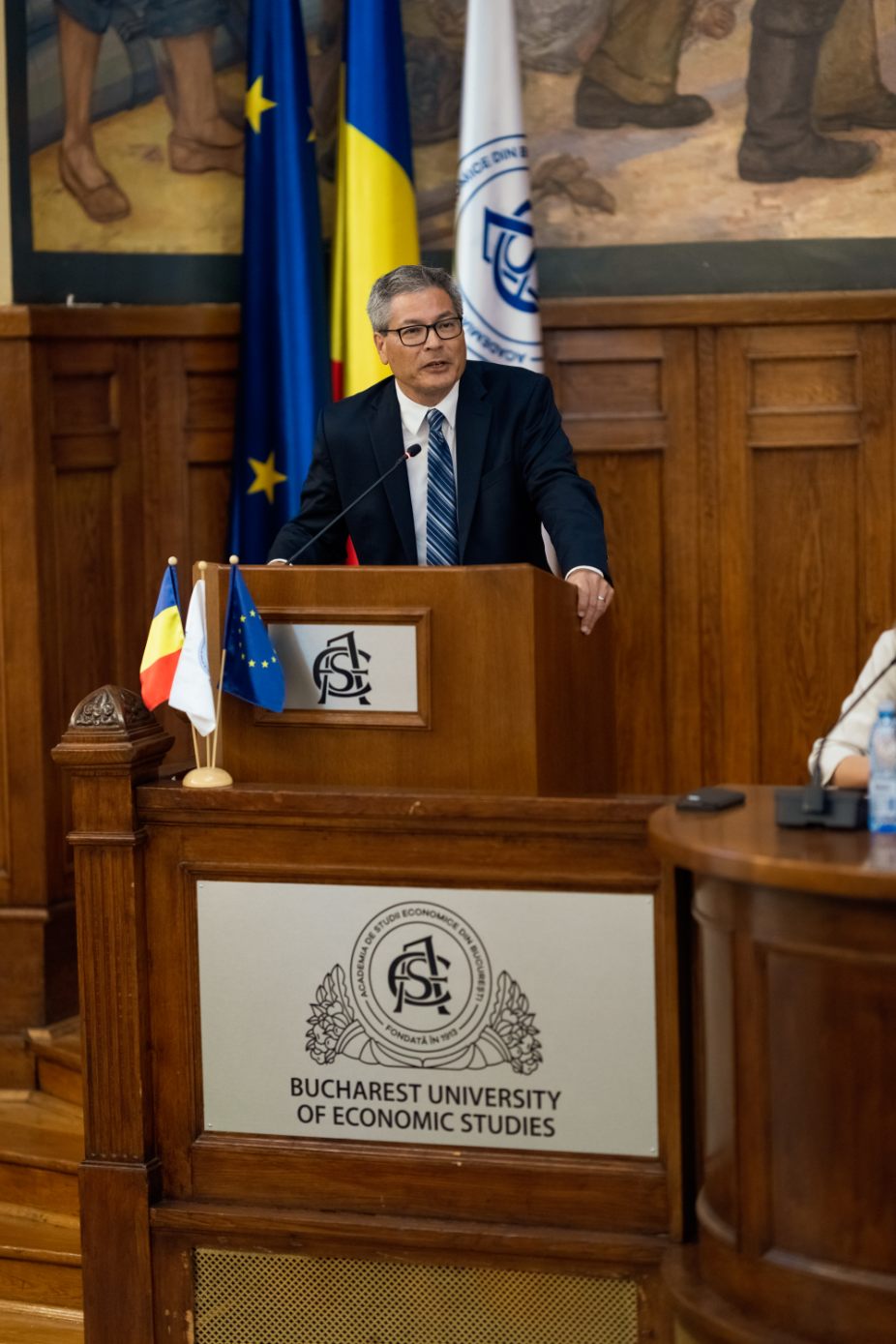
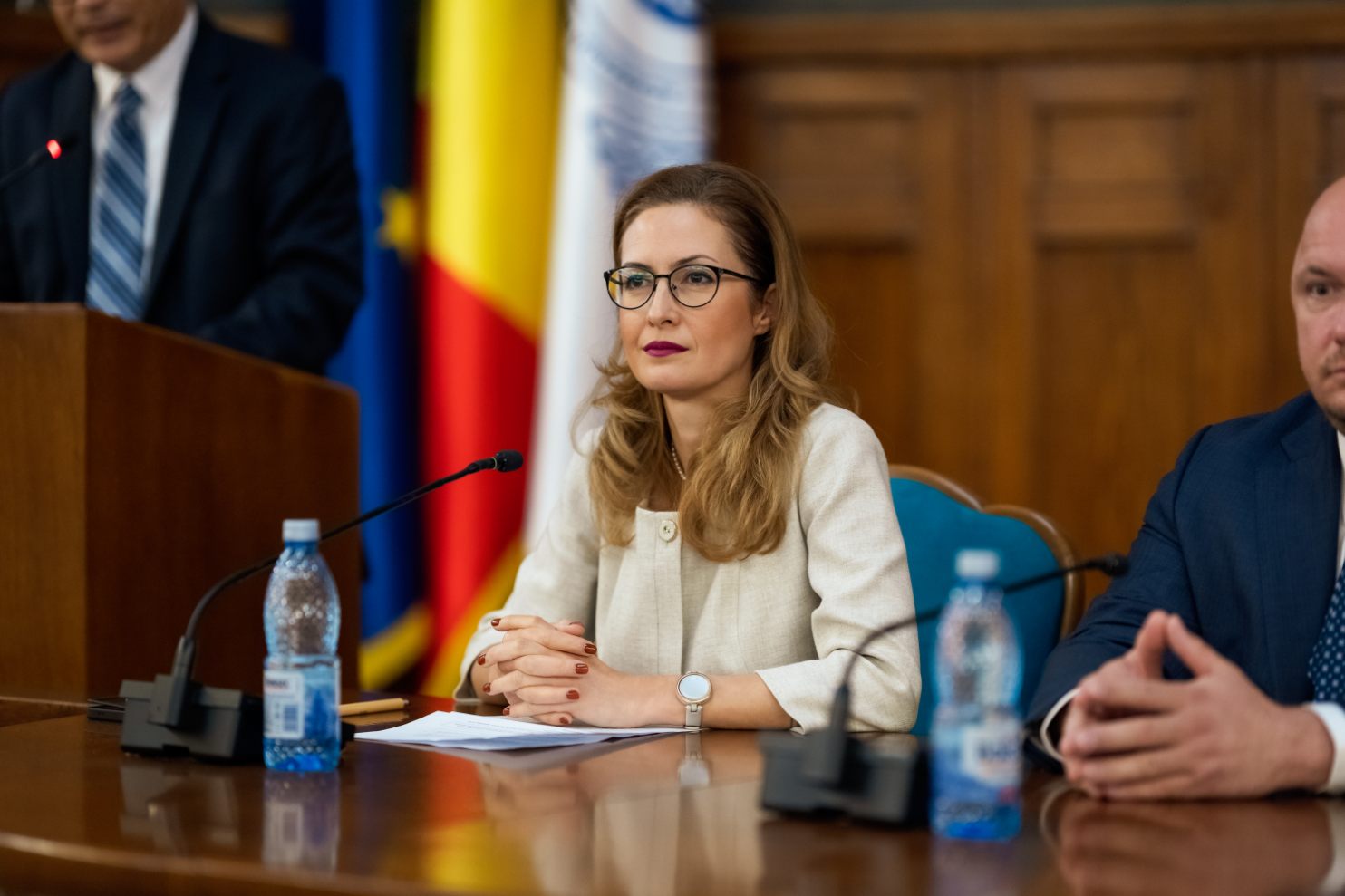
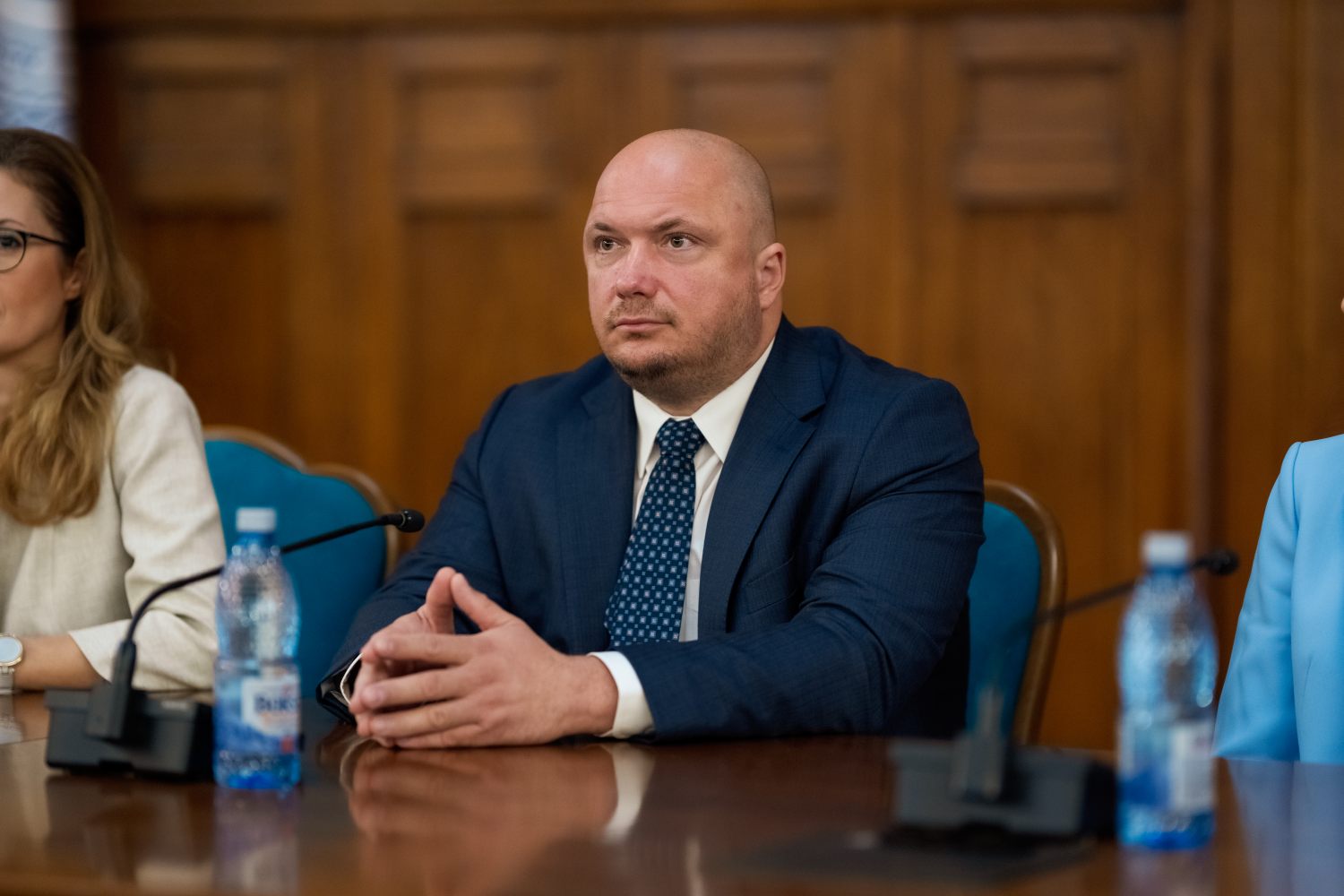
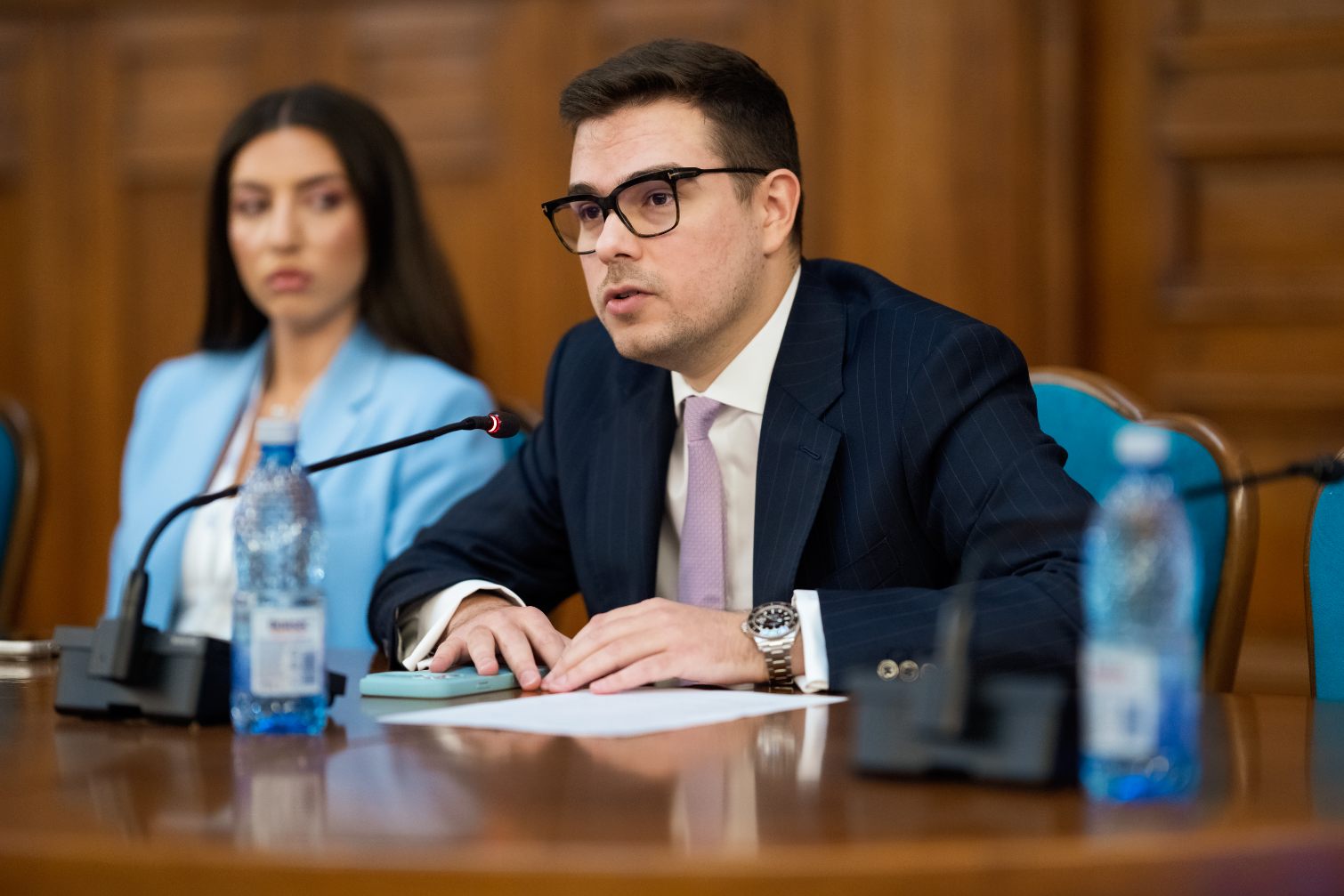
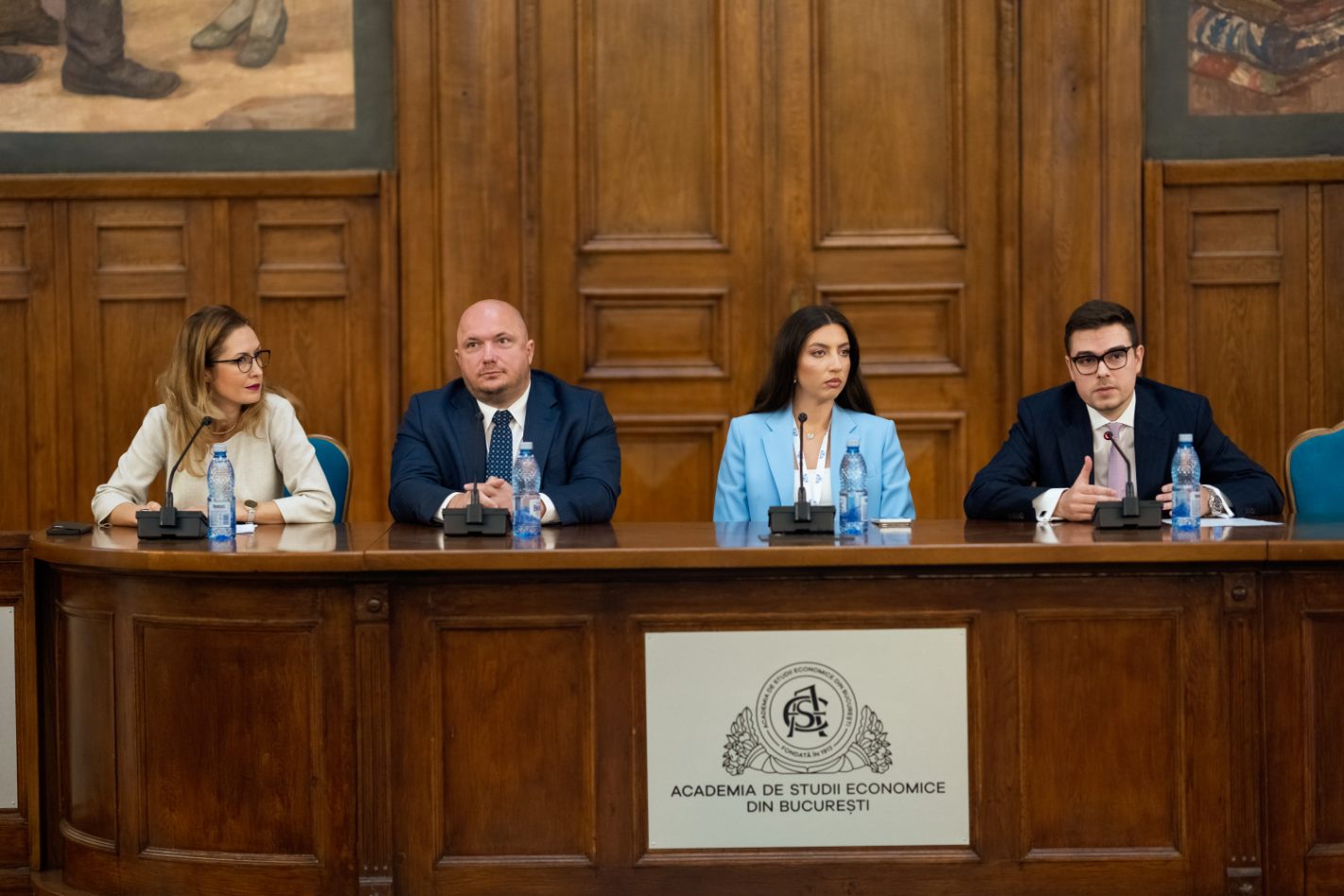
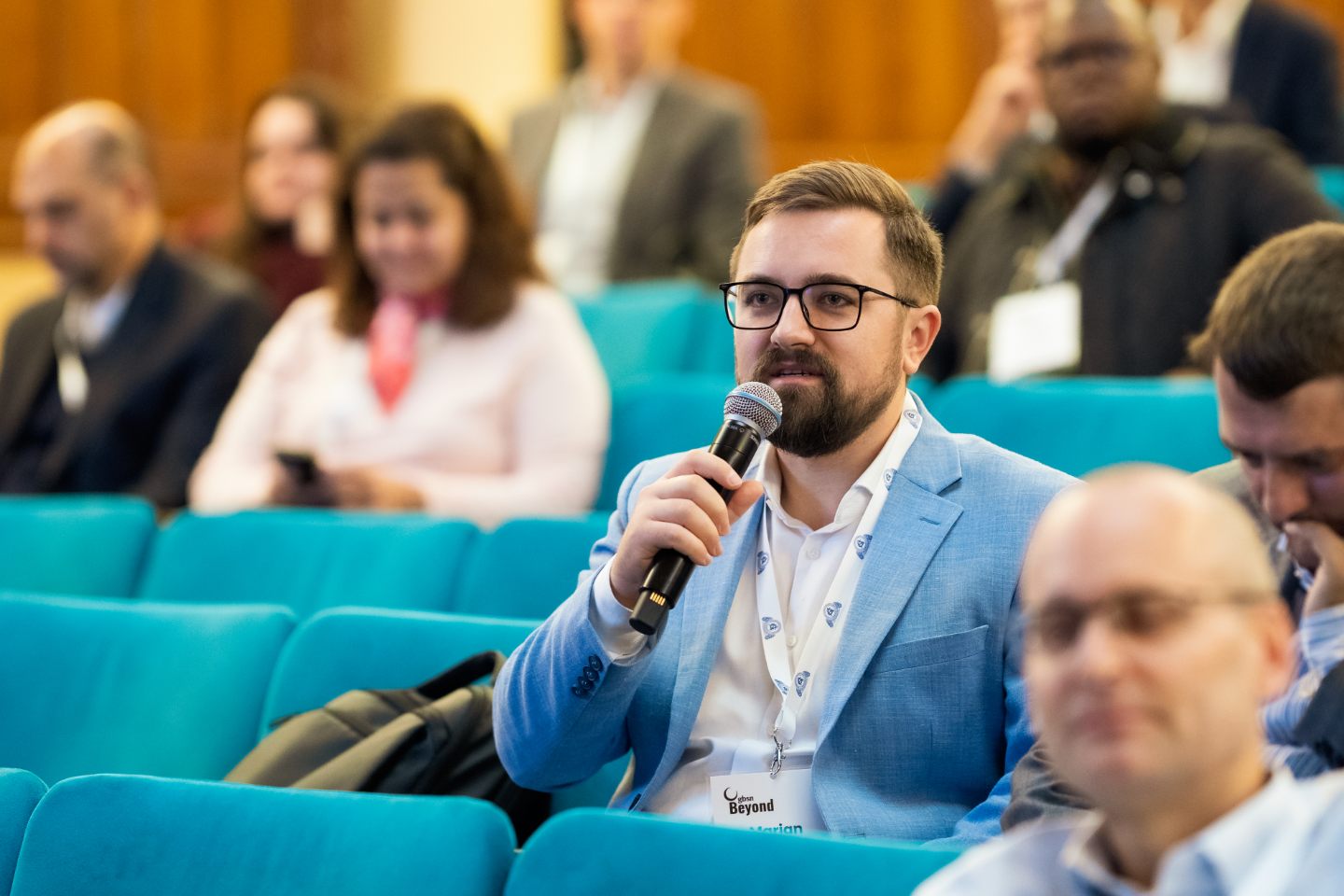
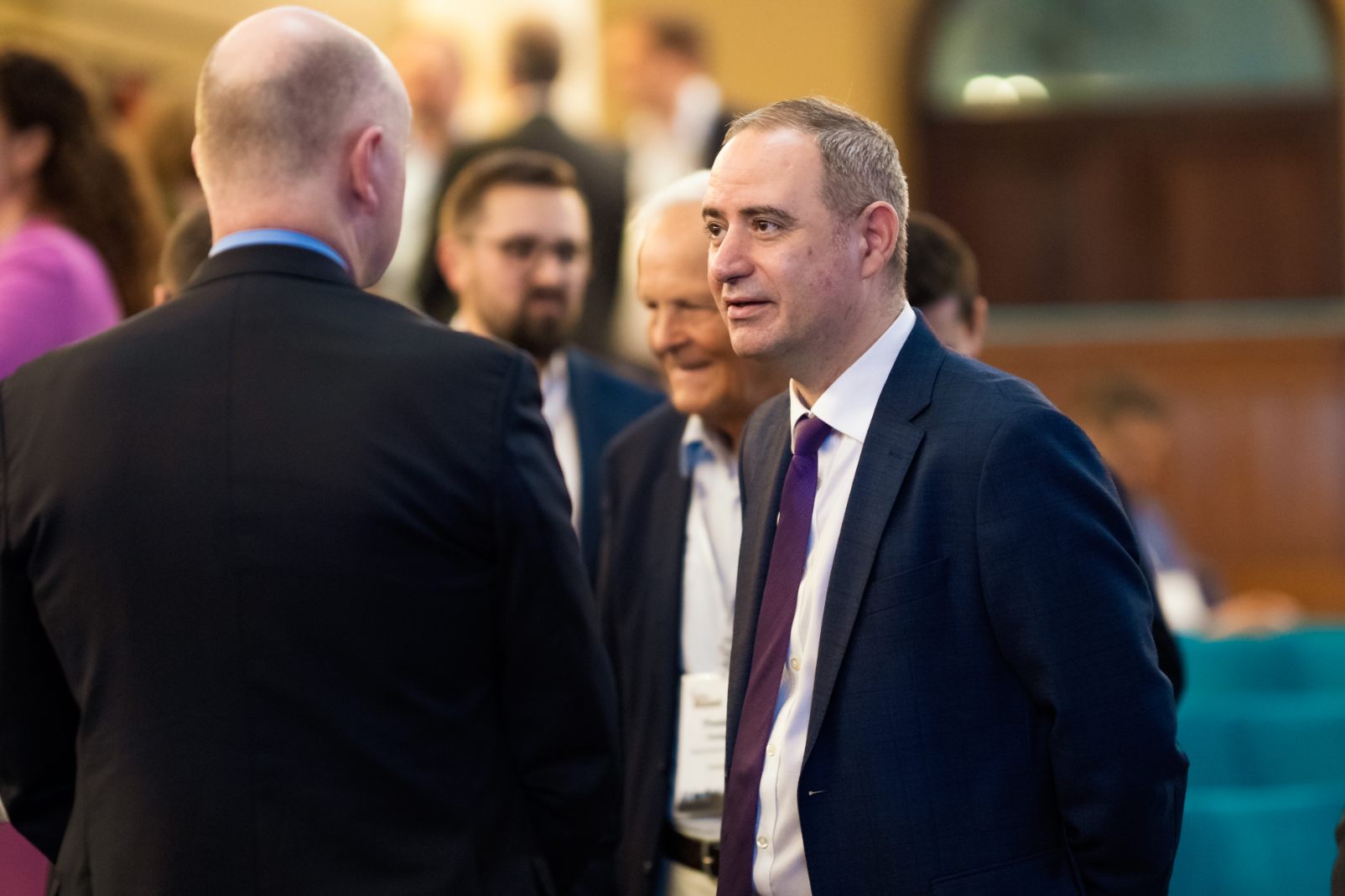
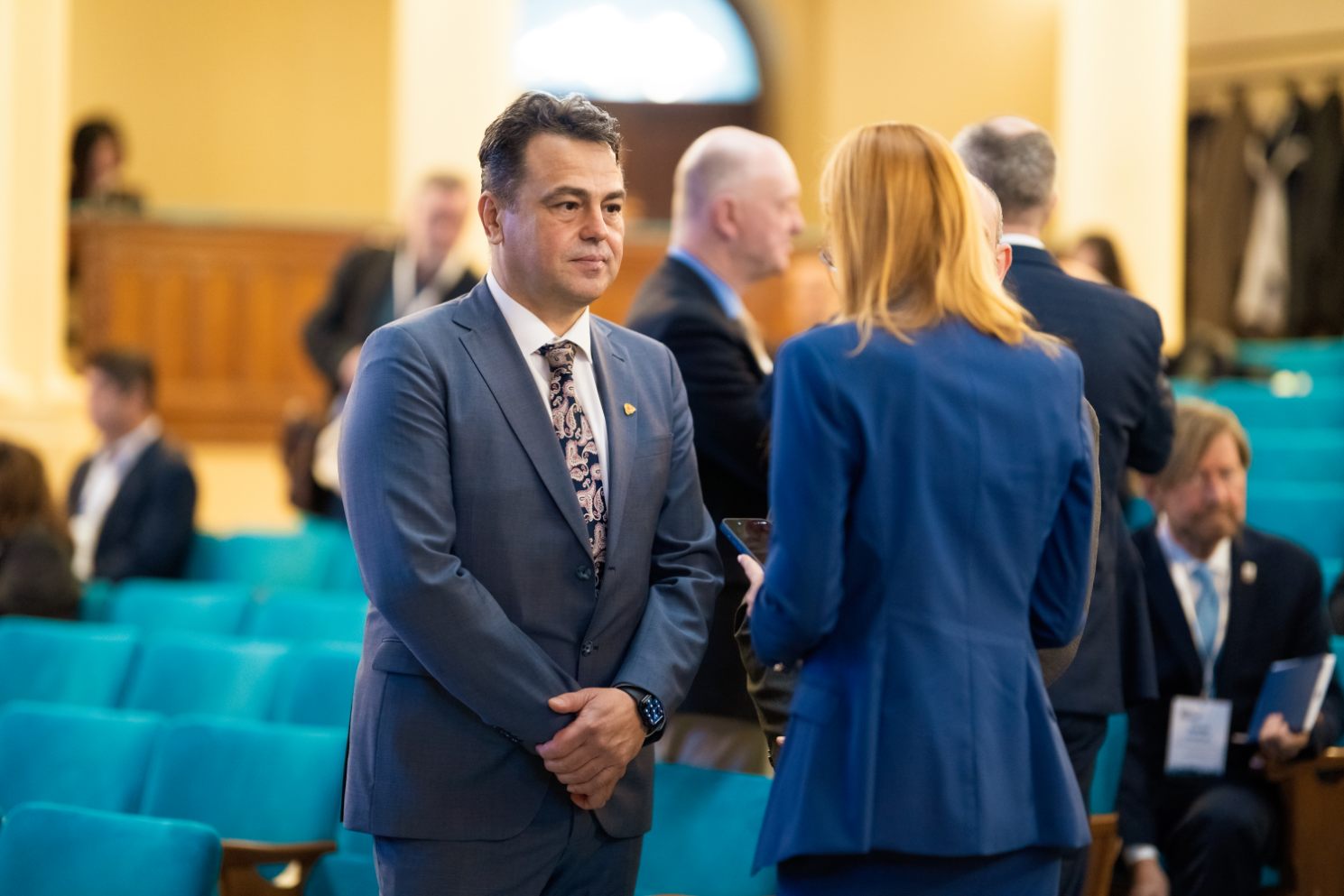
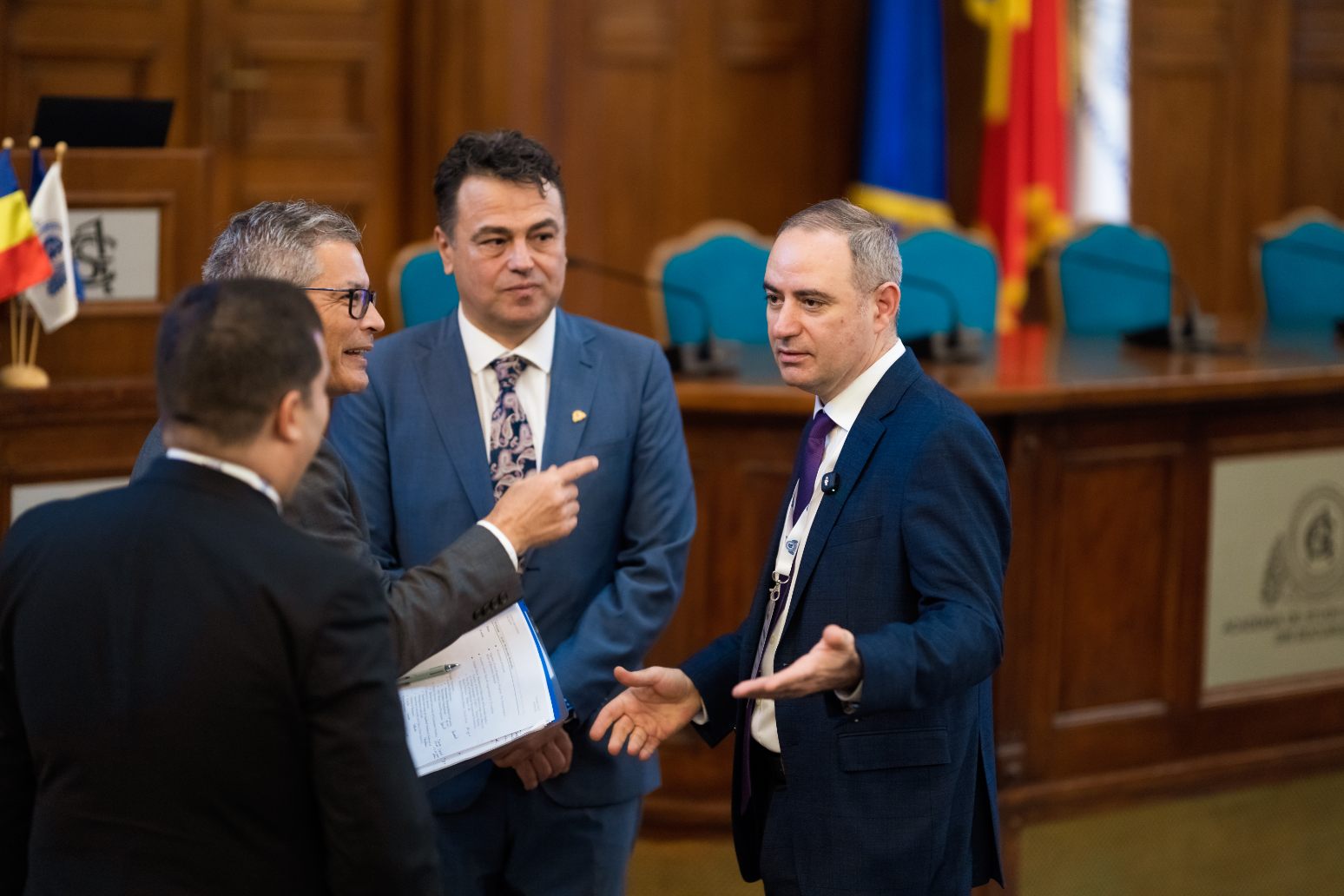
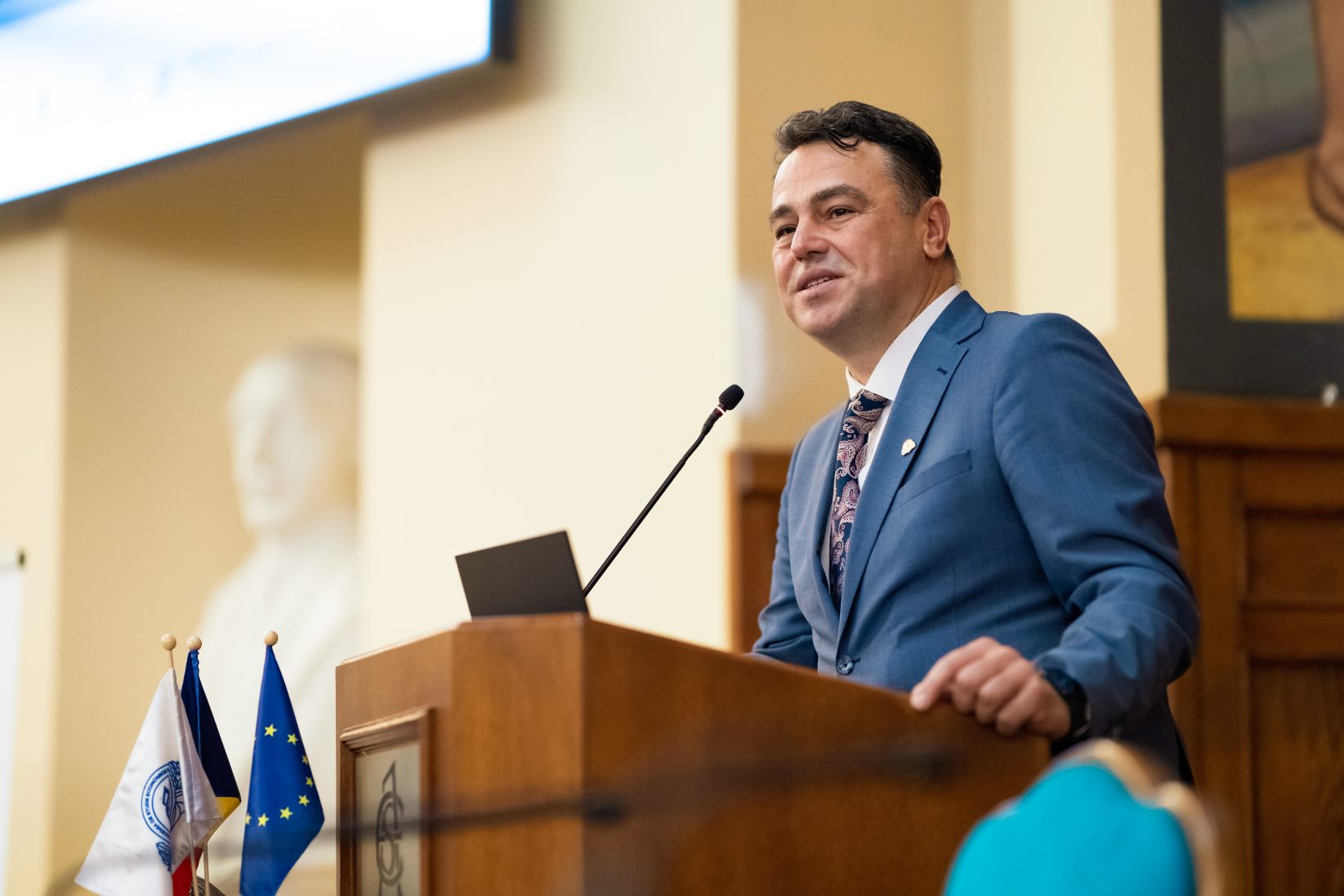
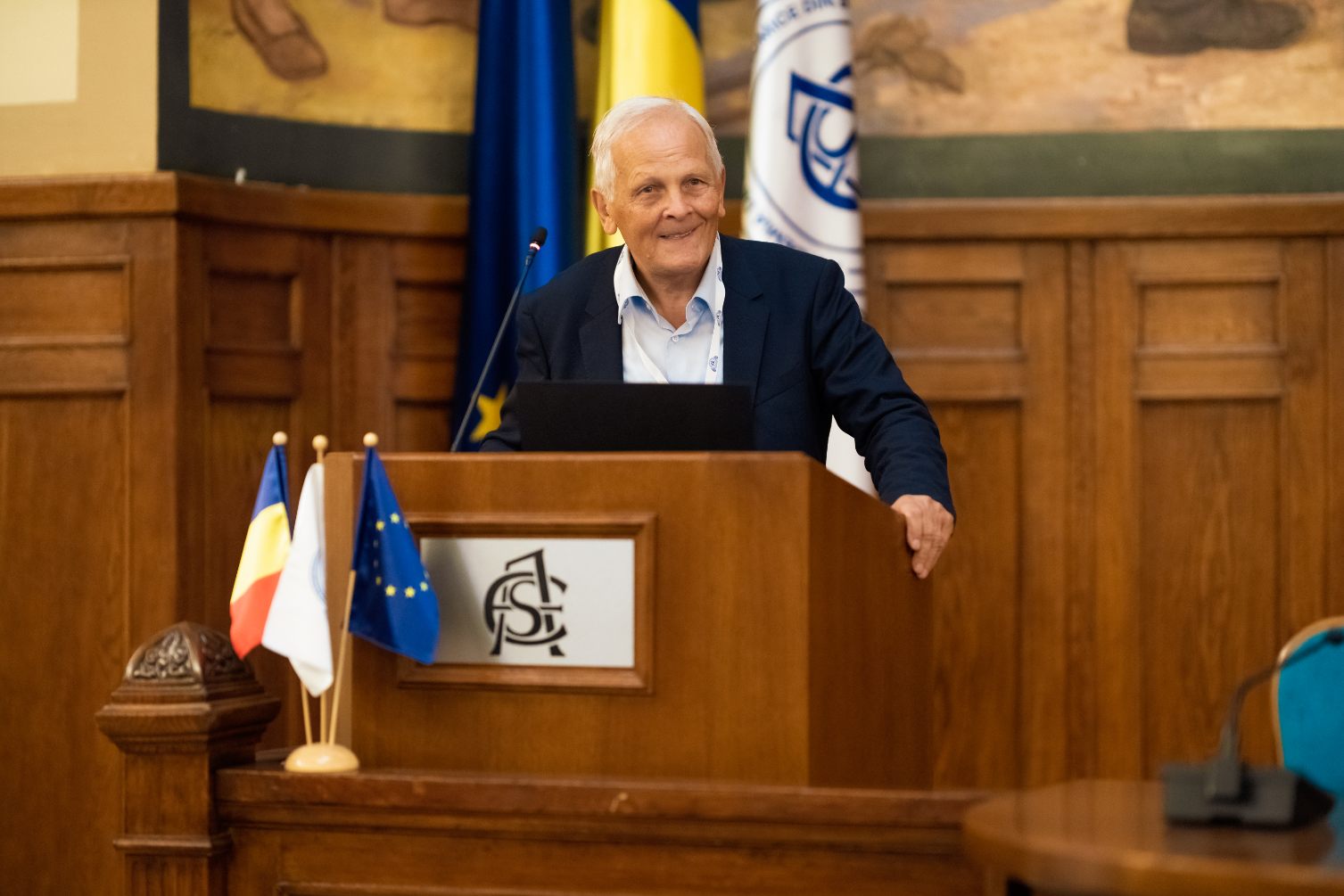
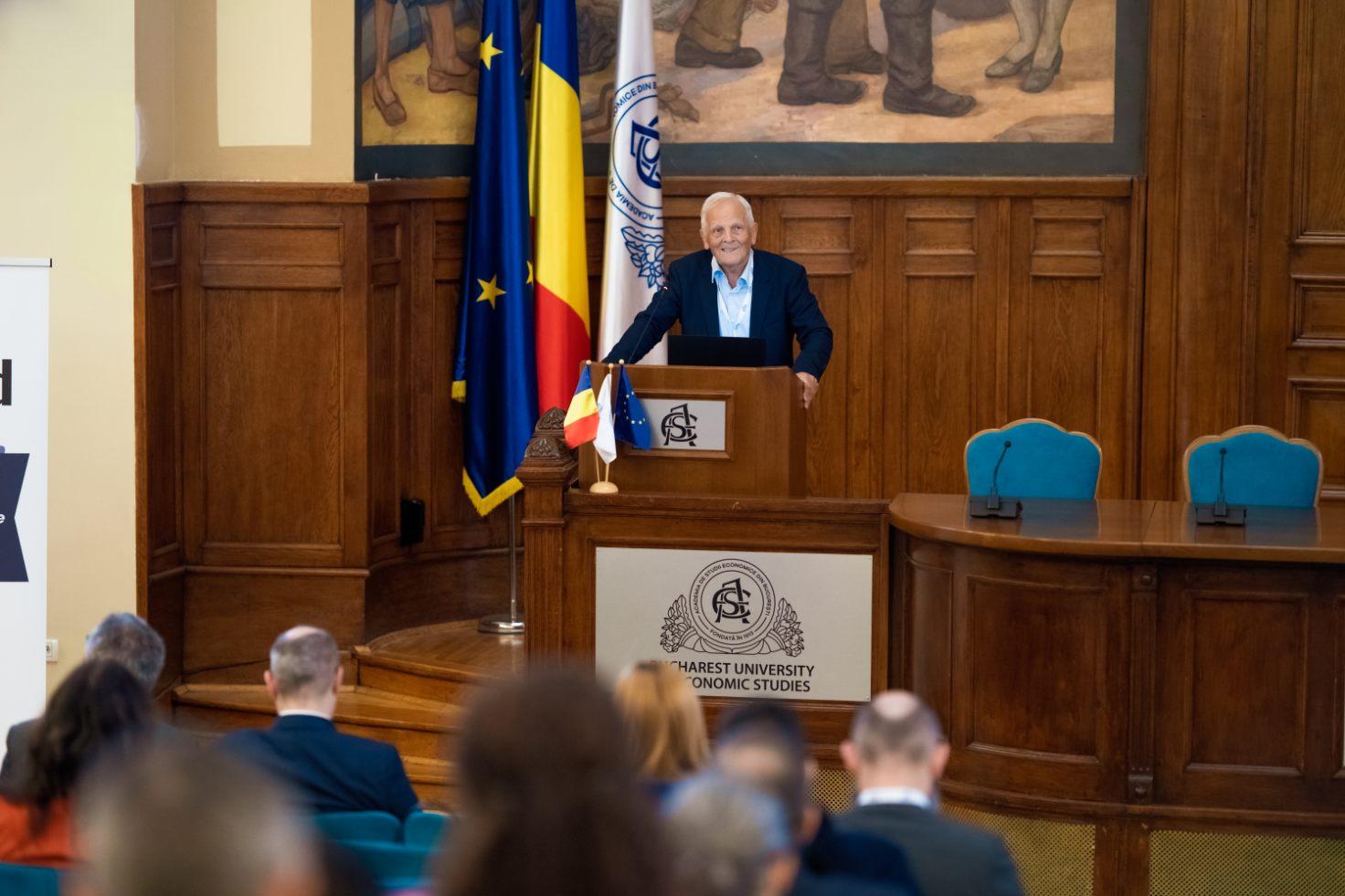
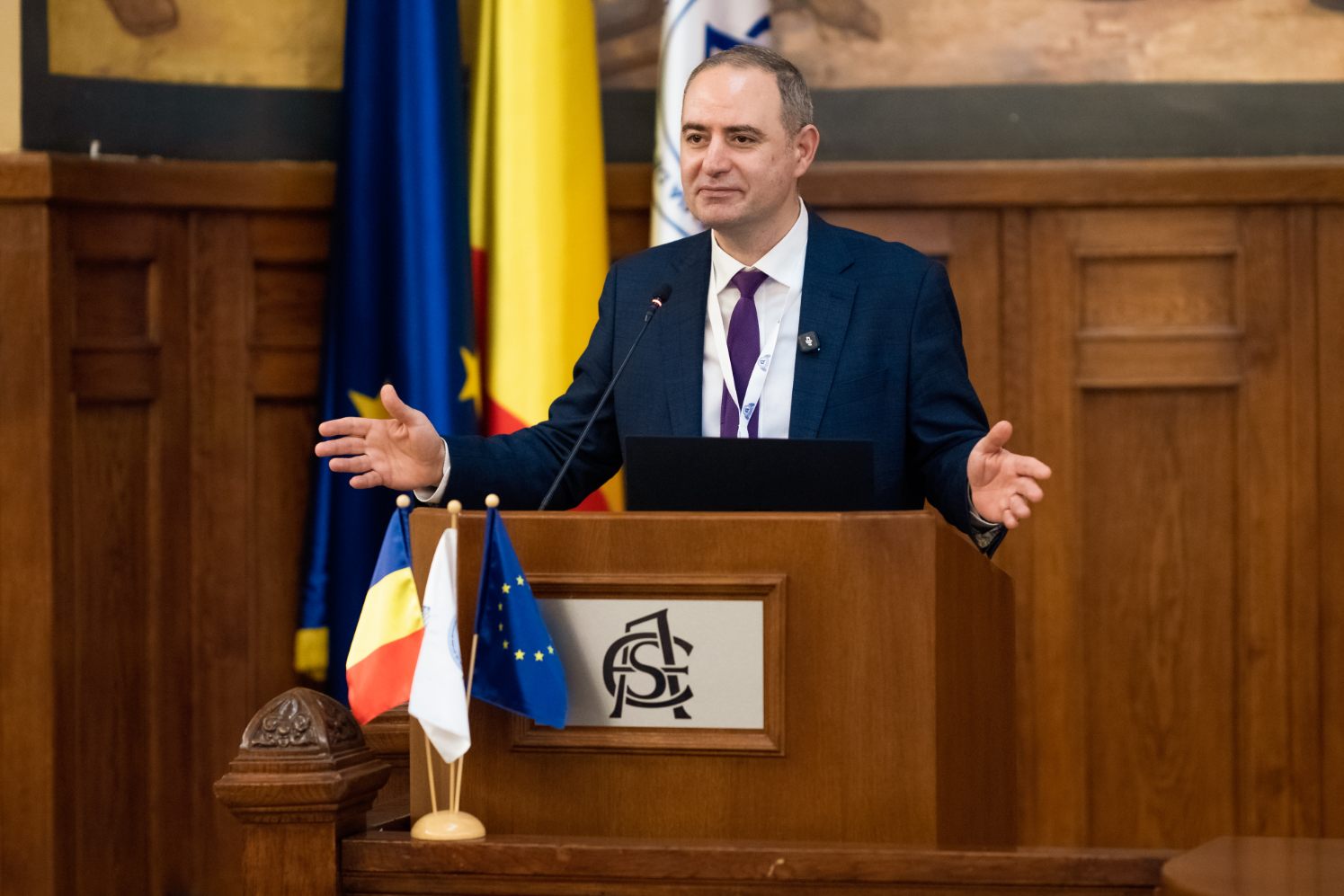
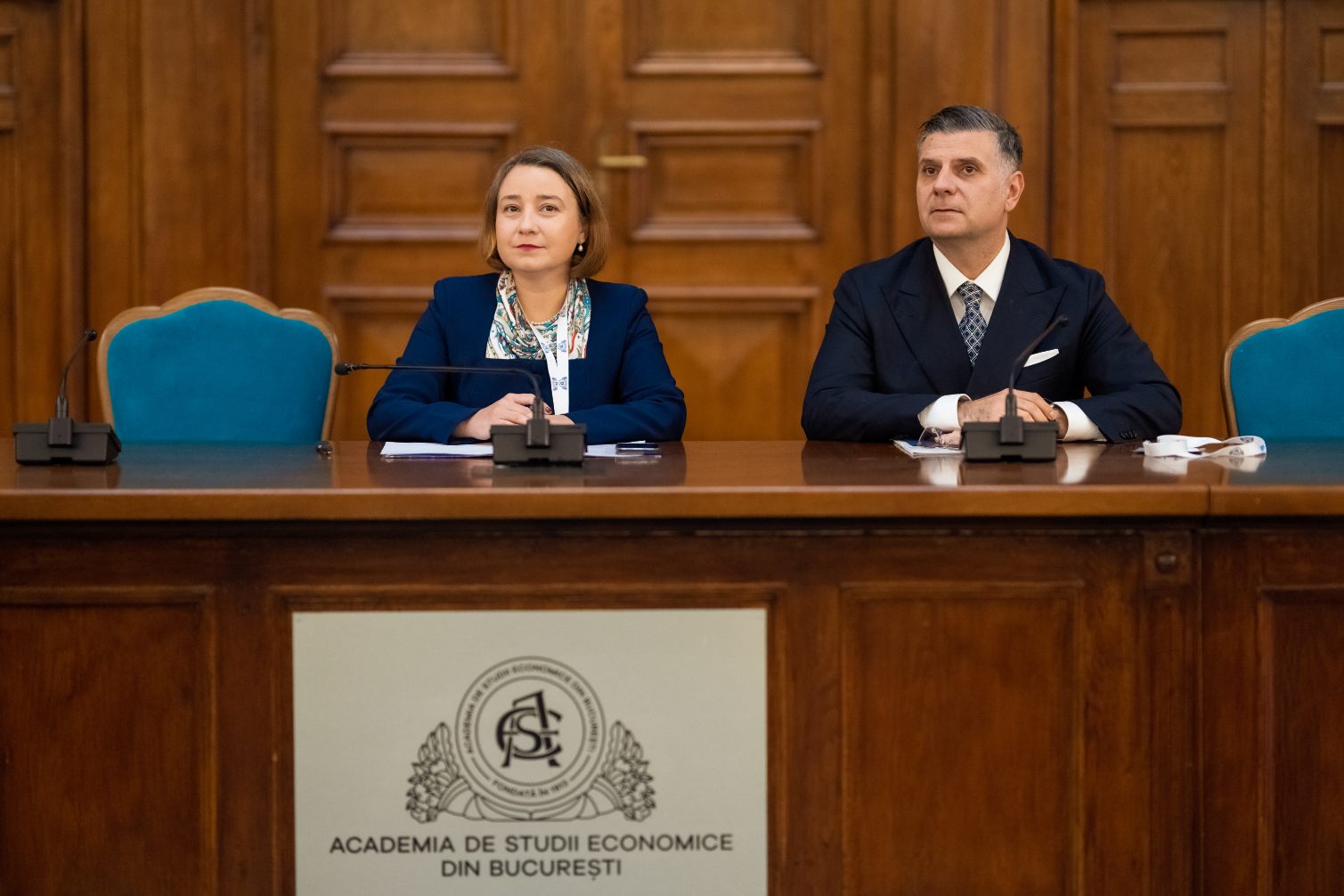
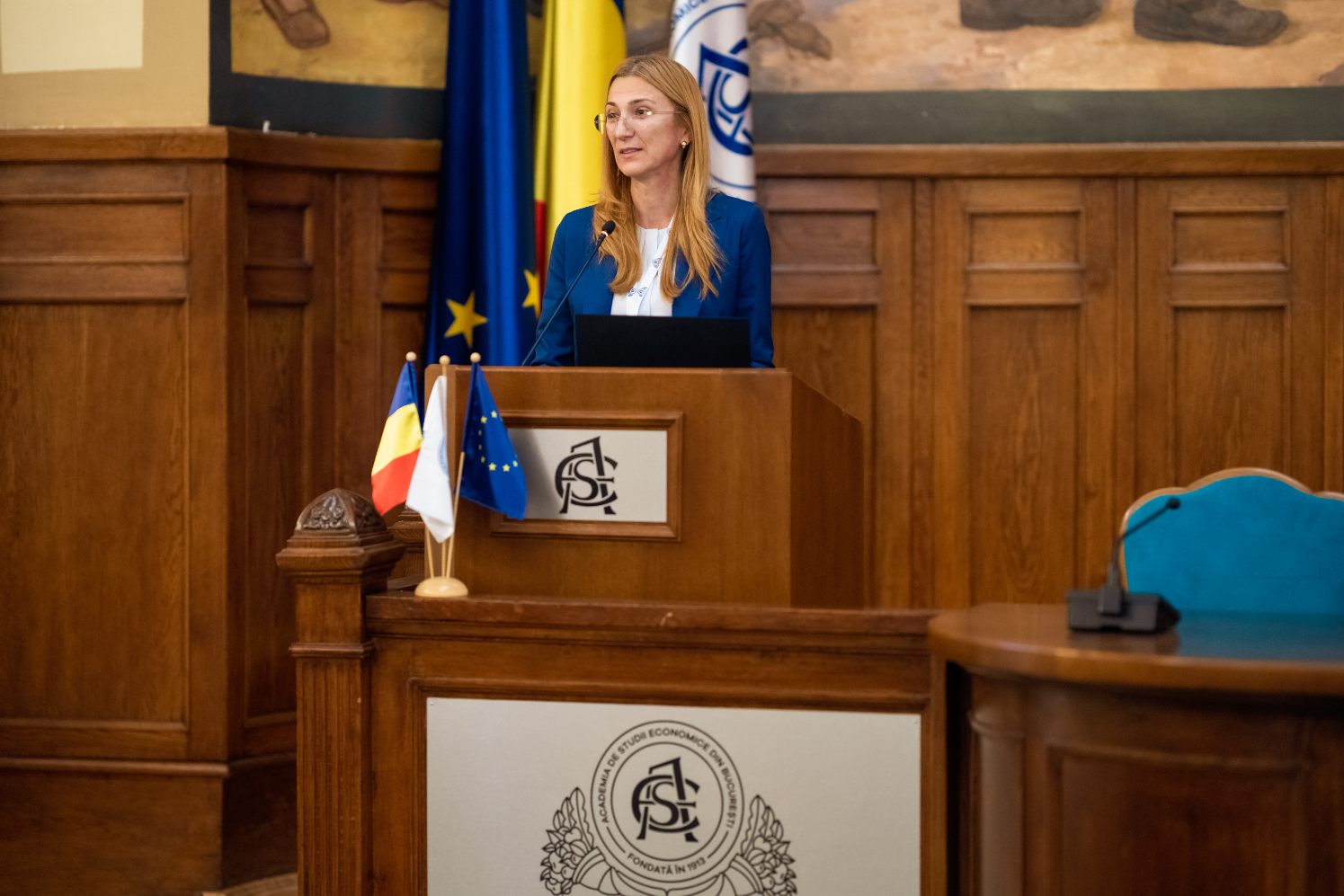
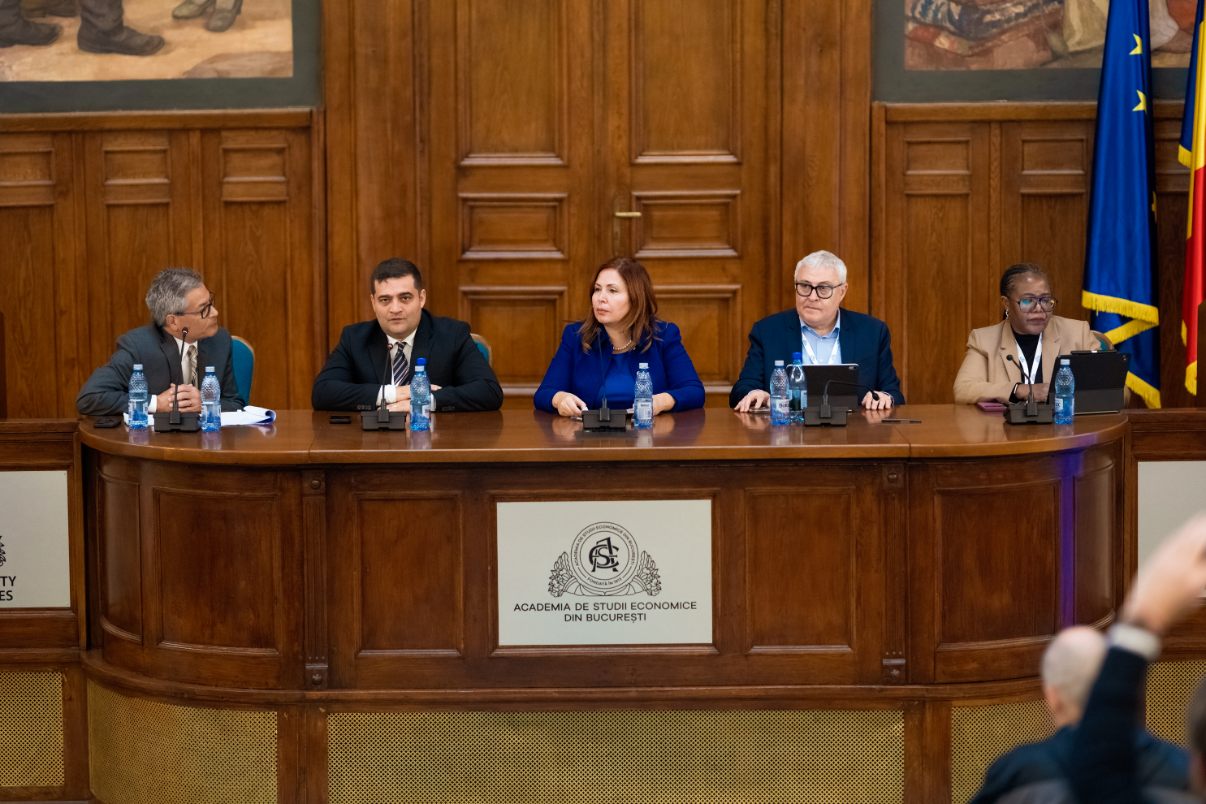
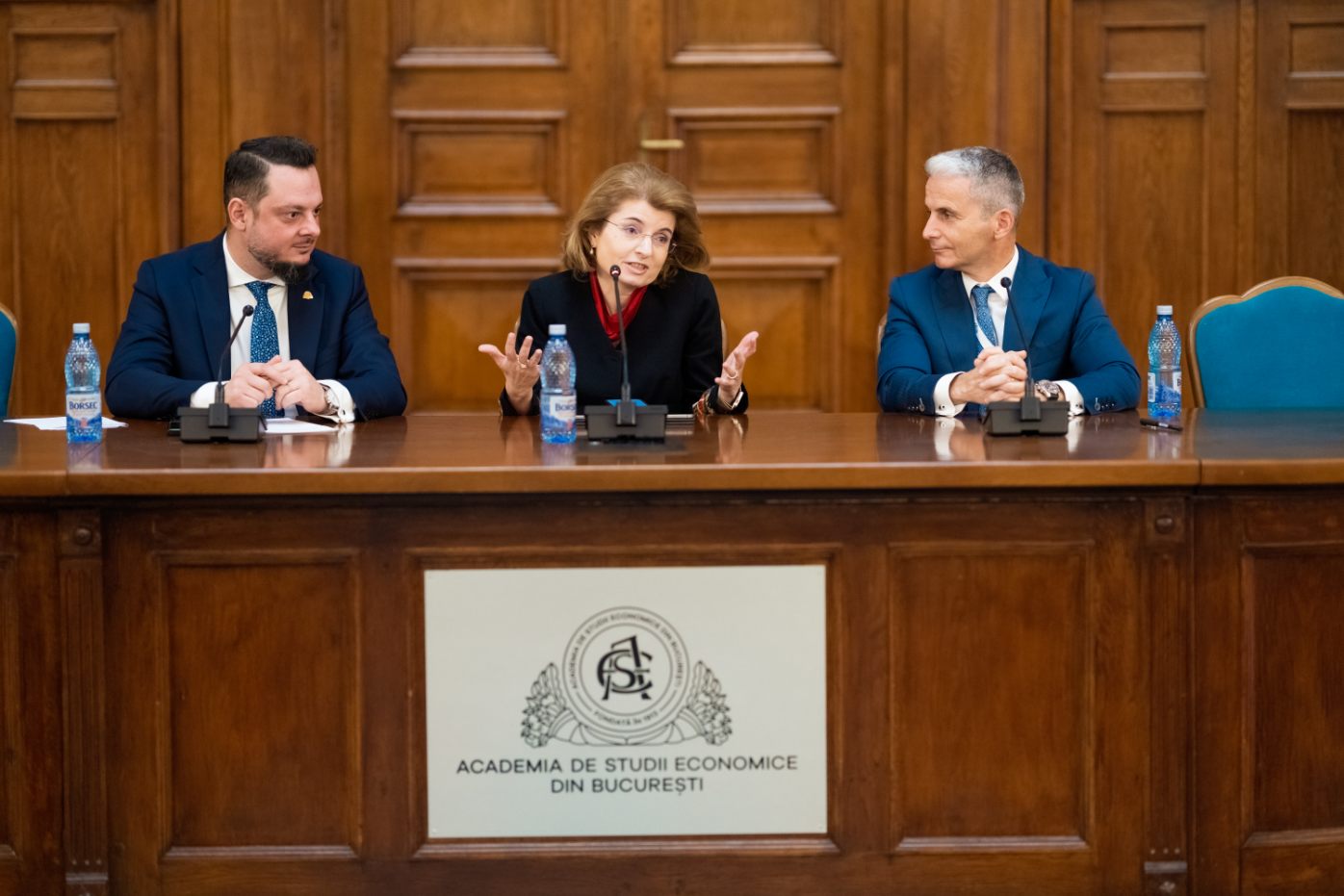
From 26 to 28 October 2026, the Bucharest University of Economic Studies (ASE) hosted GBSN Beyond 2026, the annual conference of the Global Business School Network. Under the theme “From Potential to Progress: The Transformative Role of Business Schools”, the event brought together international academic leaders, business executives and public-sector representatives to explore how business education can contribute to more competitive economies and prosperous communities.
At the Faculty of Business Administration in Foreign Languages (FABIZ), we were proud to help organise this international gathering alongside our colleagues from ASE’s Faculty of International Business and Economics (REI) and Faculty of Finance, Insurance, Banking and Stock Exchange (FABBV), working closely with the GBSN team.
A significant milestone for FABIZ and ASE
Hosting GBSN Beyond represents an important milestone in ASE’s international engagement and in FABIZ’s commitment to connecting business education with the needs of society. The conference created opportunities to strengthen relationships with universities, companies and public institutions, exchange teaching and research practices, and explore future collaborations that can benefit our students and academic community.
For FABIZ, the event also reflected the value of collaboration across faculties. By bringing together complementary expertise in business administration, international economics and finance, the organising teams helped connect global perspectives with Romania’s economic experience. The programme positioned the country as a setting for examining transformation in practice, from entrepreneurship and technological innovation to energy, industry and institutional development.
26 October: bringing the GBSN community together
The opening day featured the GBSN Members Meeting, held in two sessions, alongside opportunities for representatives of participating institutions to meet and exchange perspectives.
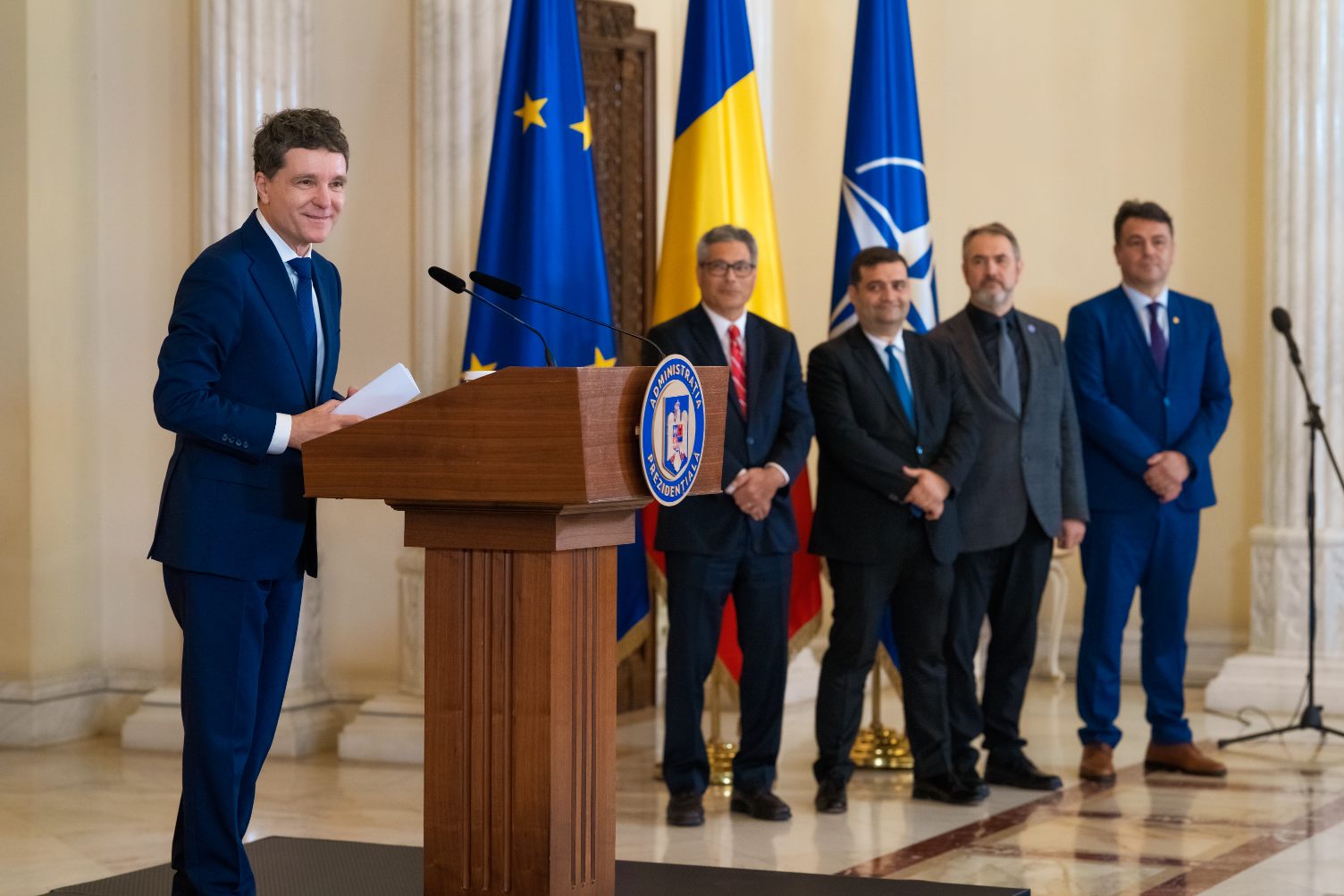
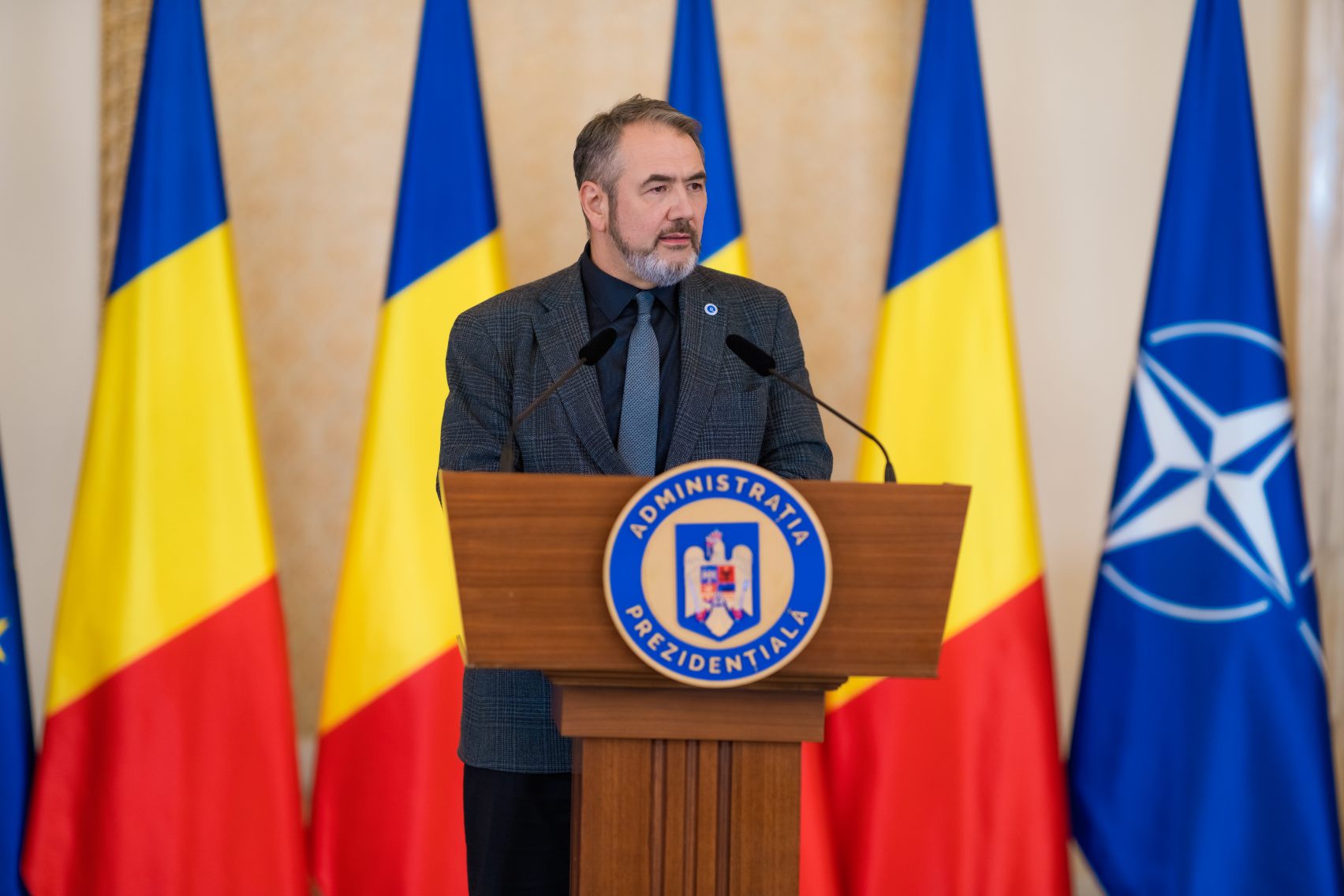
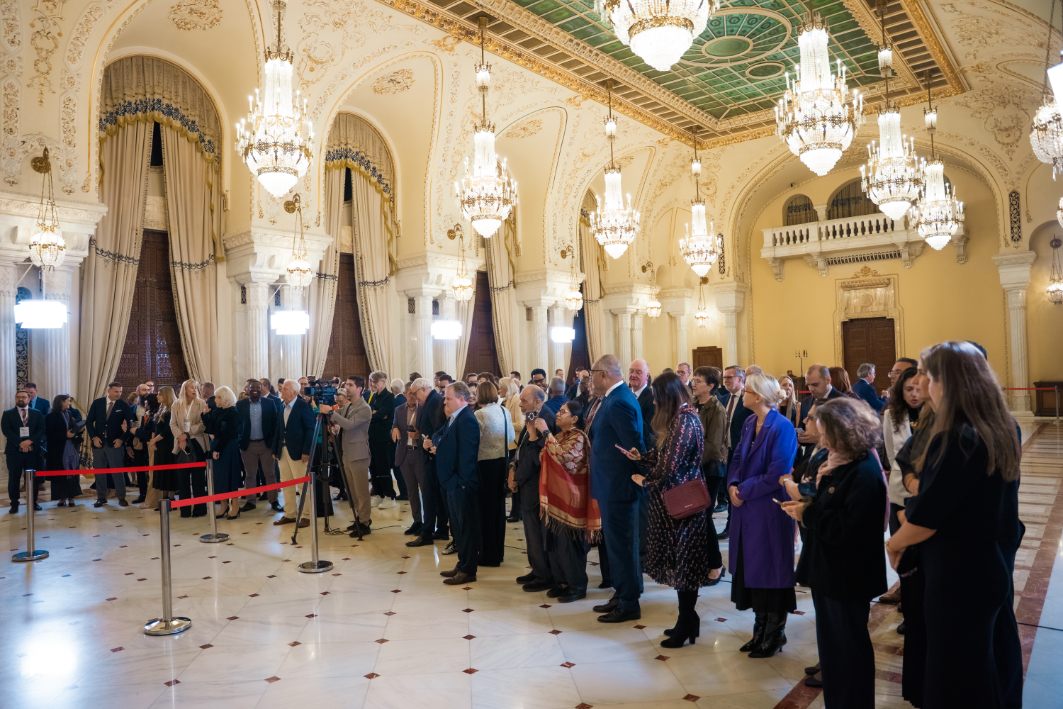
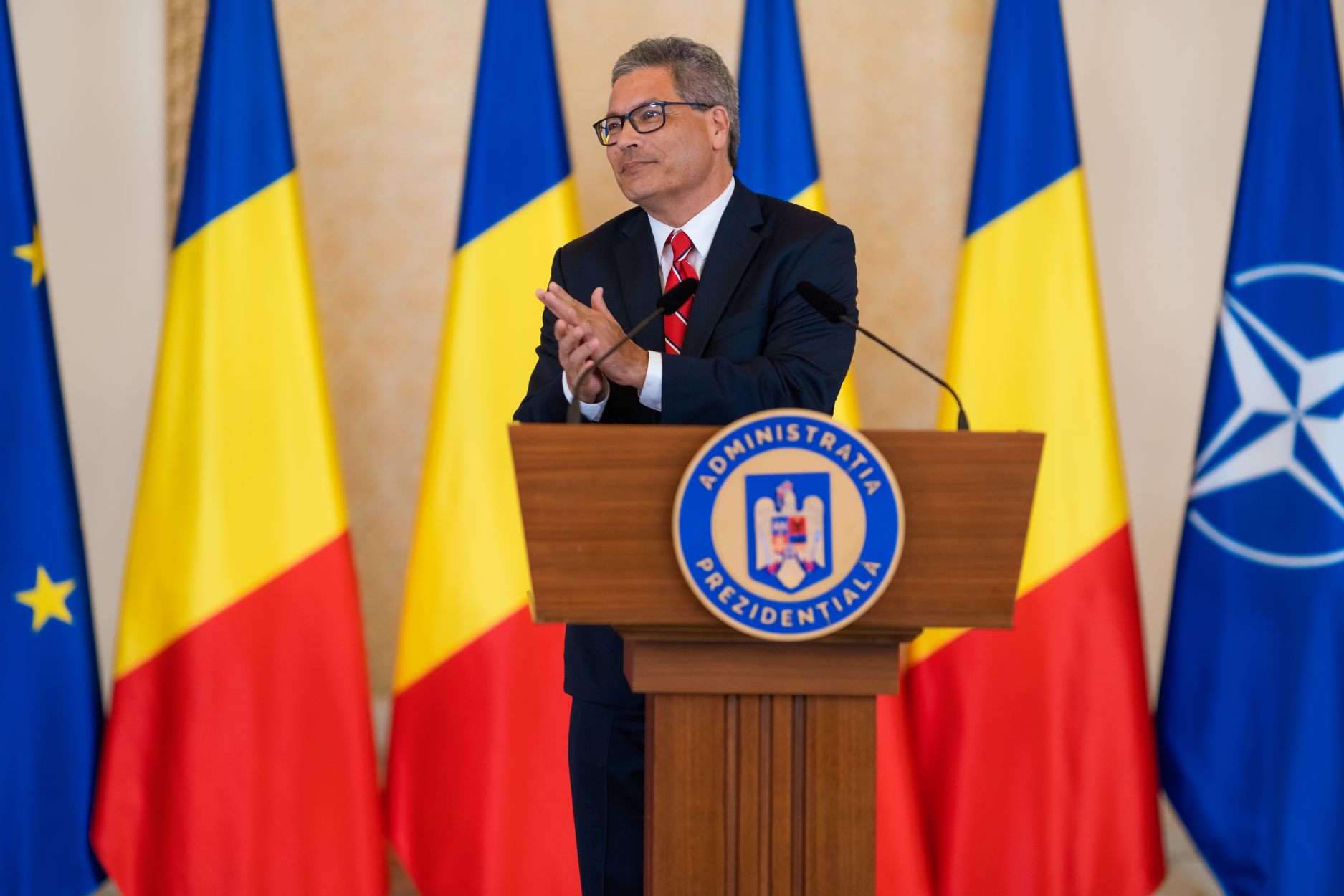
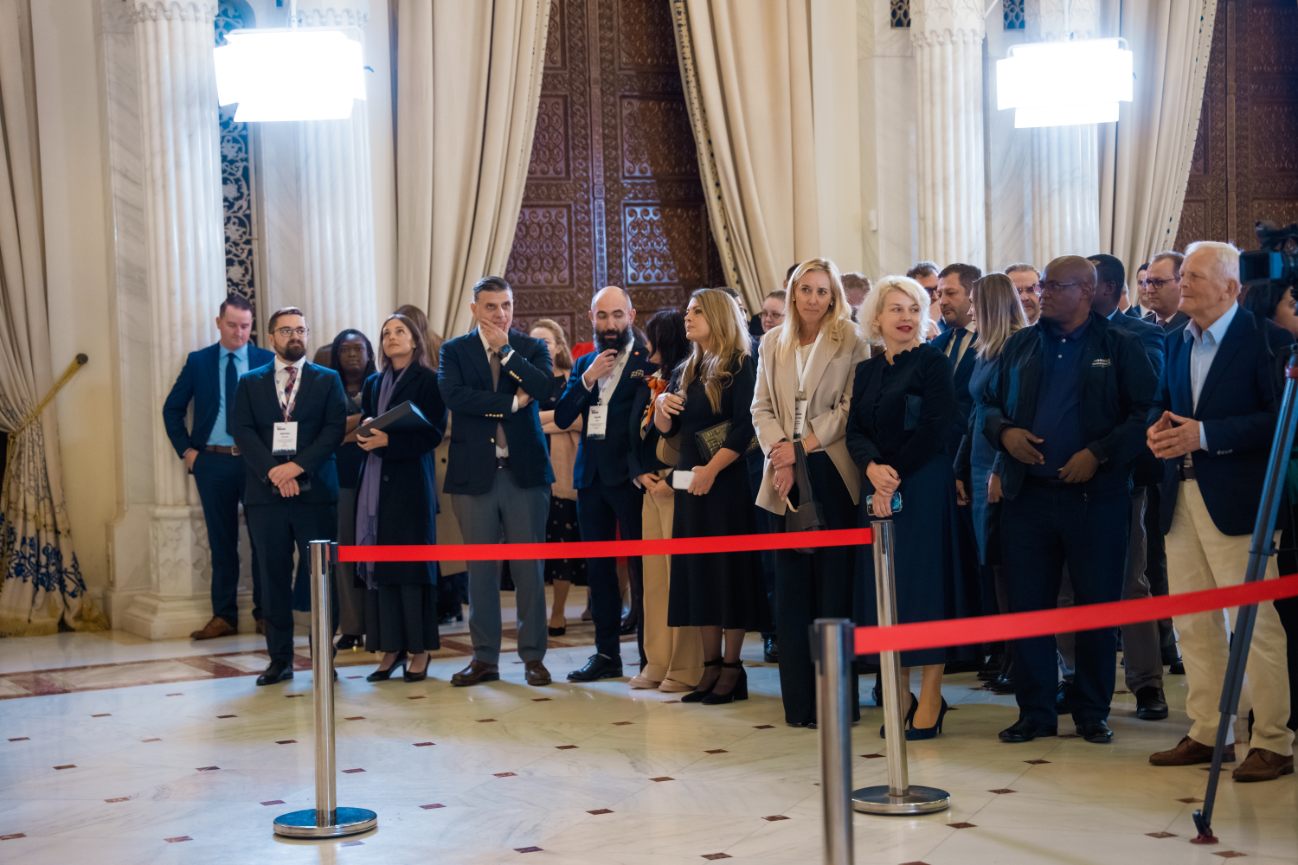
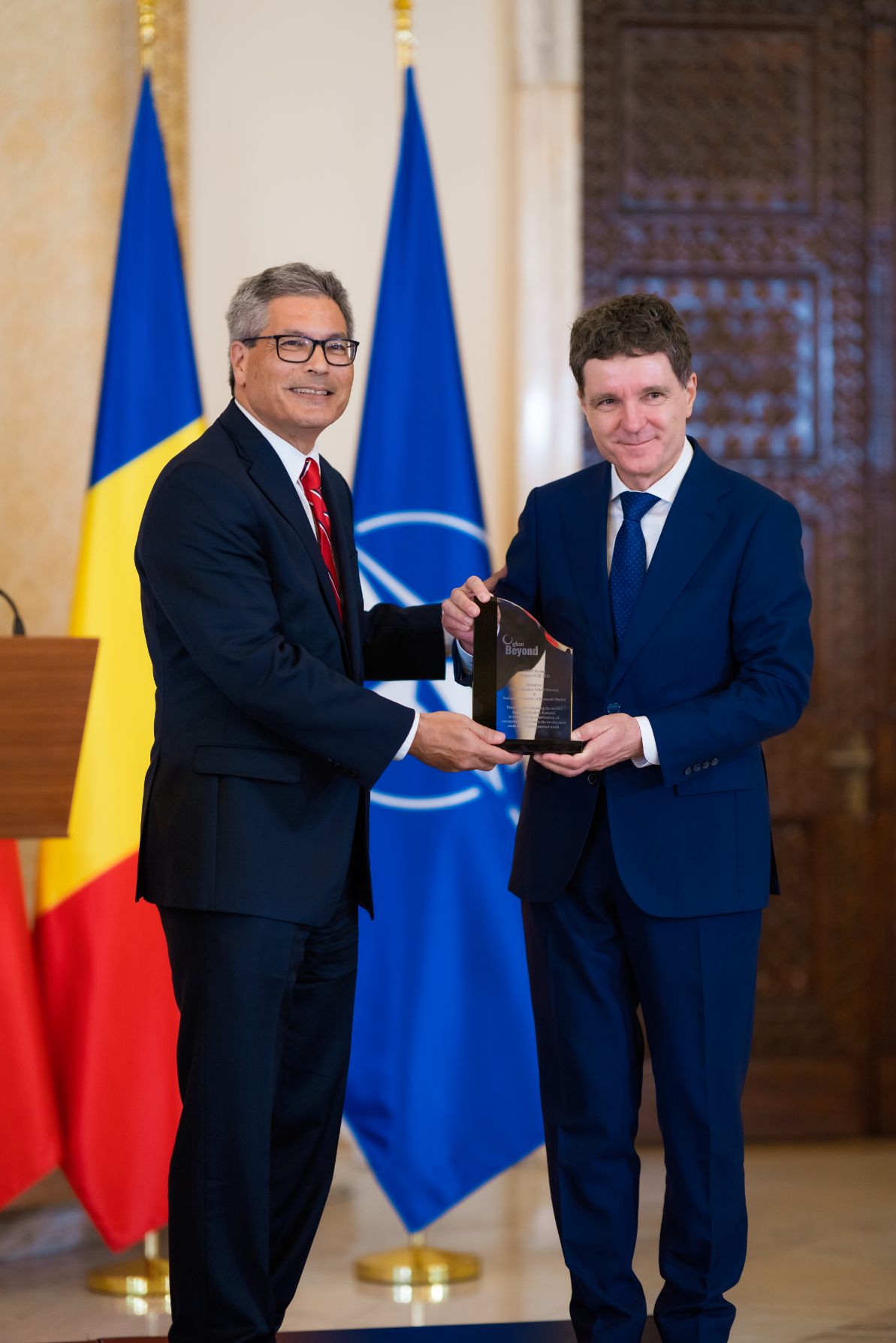
The welcome reception took place at Cotroceni Palace, where participants heard from Nicușor Dan, President of Romania, and Sorin Costreie, Minister of Education and Research. Their contributions connected the conference theme with Romania’s priorities for education and development. String quartet and opera performances complemented the evening.
We extend our sincere appreciation to the Presidential Administration for hosting the reception and to everyone involved in creating this memorable welcome for the international GBSN community.
27 October: economic transformation and the role of business schools
Dan LeClair, CEO of the Global Business School Network, opened the conference programme, setting the stage for a day of discussions on economic change, institutional leadership and educational innovation.
Romania’s Journey
The opening keynote brought together Theodor Stolojan, former Prime Minister of Romania, and Alexandru Nazare, Minister of Finance, Government of Romania, to address Romania’s economic journey and the challenges shaping its future.
Politics, Markets, and Society
The relationship between public policy, financial markets and society was explored by Alina Popa, CFO and Executive Board Member, OMV Petrom; Alexandru Petrescu, President of the Financial Supervisory Authority (ASF); and Georgiana Camelia Georgescu, Dean of FABBV, ASE.
Business Schools as Systems Leaders
This session examined how business schools can contribute to wider economic and social transformation. It featured Olayinka David-West, Dean of Lagos Business School; Thami Ghorfi, Dean of ESCA Ecole de Management; Suhnaz Yilmaz Ozbagci, Dean of the College of Administrative Sciences and Economics, Koç University; and Tănase Stamule, Dean of FABIZ, ASE, in a discussion moderated by Dan LeClair, GBSN.
For FABIZ, this conversation was particularly relevant to our role in preparing graduates who can work across cultures, organisations and sectors, while understanding the broader consequences of business decisions.
The Next Chapter: Eastern Europe, Europe, and the Global Economy
Alexandru Reff, Country Managing Partner, Deloitte Romania and Moldova, and Ana Bobirca, ASE faculty member and Chair of the Board of Directors of TTS — Transport Trade Services, discussed the region’s place in an evolving international economy. The session was moderated by Radu Petrariu, Dean of REI, ASE.
Three parallel workshops: connecting ideas with educational practice
The afternoon programme included three parallel workshops, each addressing a different dimension of the contribution business schools can make to organisations and communities.
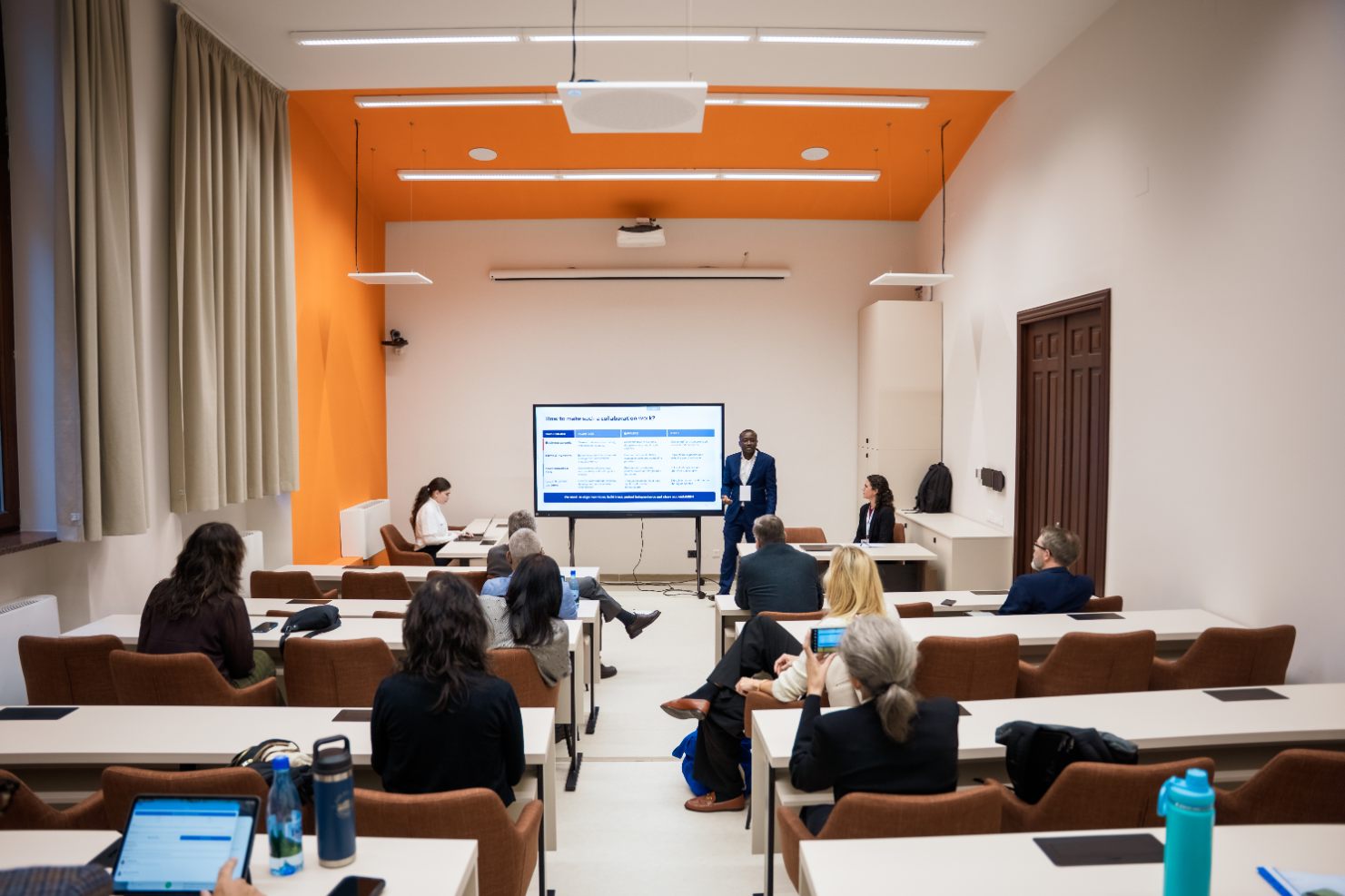
Evaluating Impact for Better Decisions and Design
Heather Esper, Senior Director of Performance Measurement and Improvement, William Davidson Institute at the University of Michigan, and Gilbert Kofi Adarkwah, Associate Professor, BI Norwegian Business School, contributed to the workshop on using impact evaluation to inform decisions and the design of interventions.
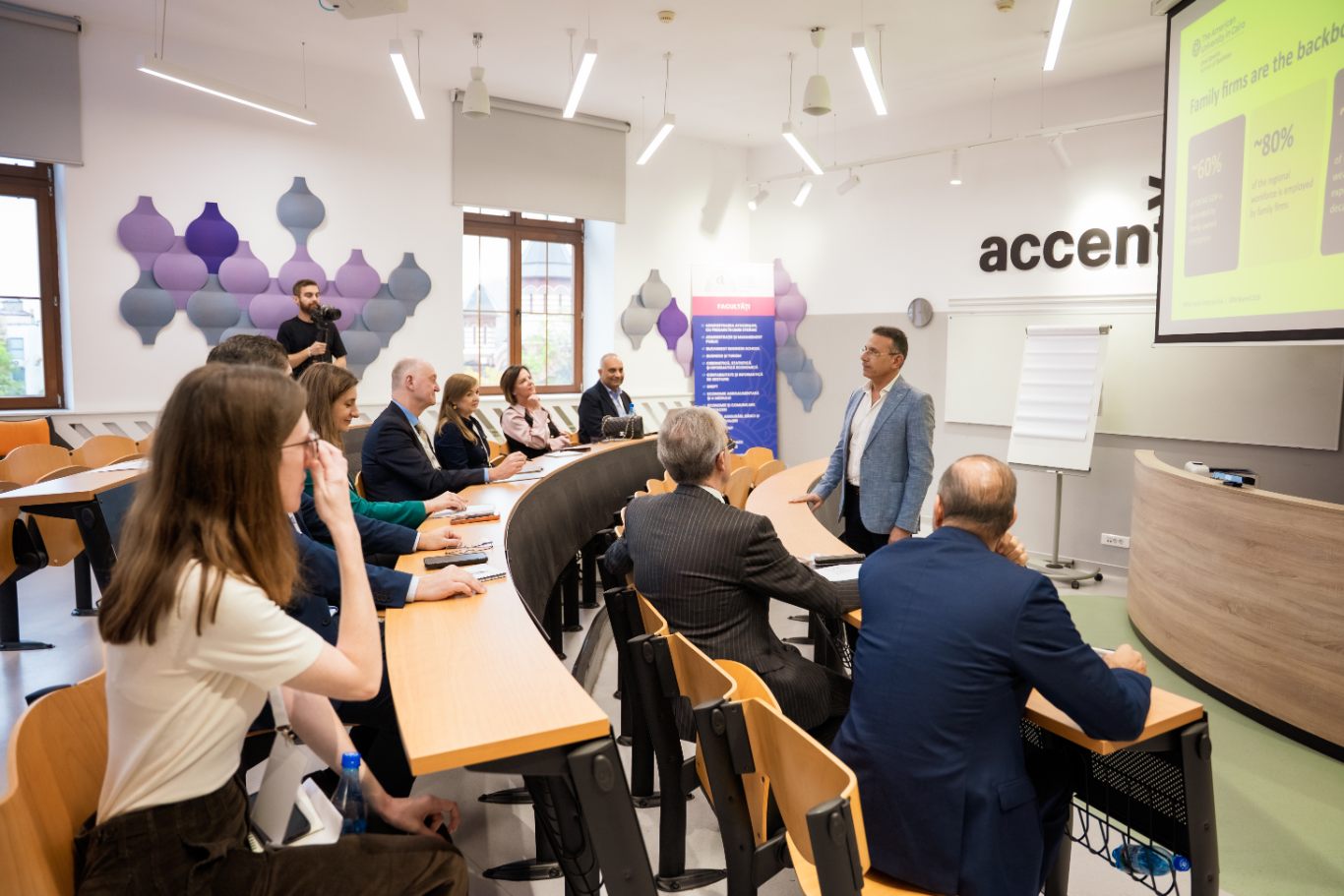
Bridging Gaps in Family Enterprise Education
This workshop focused on education for family enterprises, with Hakim Meshreki, Associate Professor of Marketing, Onsi Sawiris School of Business, The American University in Cairo; Benjamin Morisse, Vice Dean for Strategy and Institutional Relations, ESSCA School of Management; and Ricardo Aparicio Castillo, Director of the Research Center for Family Businesses (CIFEM), IPADE Business School.
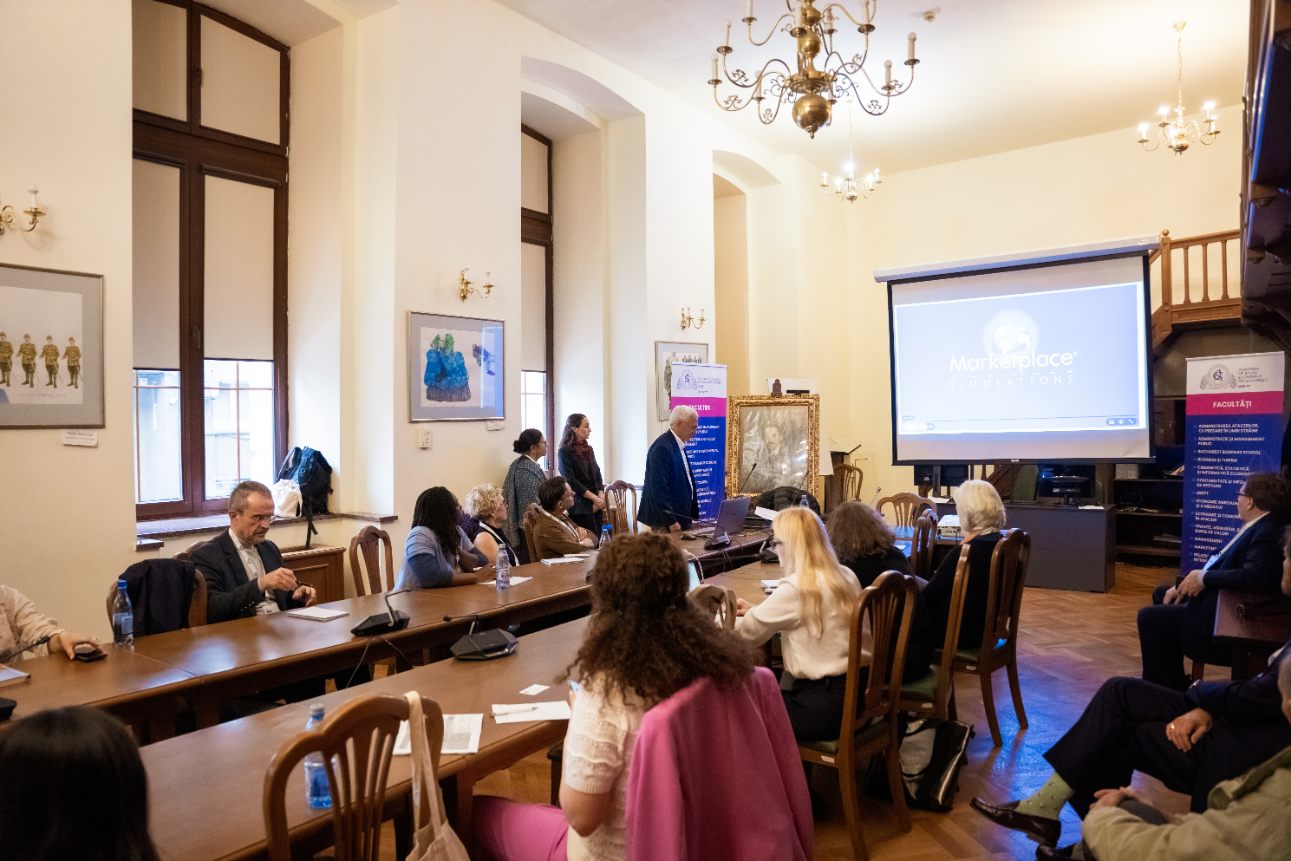
Real World Learning Meets Societal Impact
The connection between practical learning and societal impact was explored by Nyasa Steger, Director of the International NGO Law and Policy Project, ZHAW School of Management and Law; Saleha B. Khumawala, Professor, Founding Director of the SURE Programme and Executive Director of the Dakri Center for Economic Inclusion, Bauer College of Business, University of Houston; and Ernie Cadotte, Author and CEO, Marketplace Simulations.
Industry, educational innovation and responsible leadership
Industry Transformation: Implications for People and Planet
Perspectives on industrial change came from Gergana Manolova, Director of Strategic Growth and Impact, M-Gas Ltd; Radu Timiș Jr., CEO, CrisTim Family Holding; Radu Pițurlea, Chairman and CEO, Concelex; and Matthew Kilgarriff, Cambridge Institute for Sustainability Leadership.
Education Innovation to Address Critical Challenges and Scale
Megan Mitchell, Senior Director of Universal Learning, Massachusetts Institute of Technology, and Benjamin Stevenin, Co-creator of Deans Insight, contributed to the session on educational innovation and extending the reach of learning.
Business Leadership Principles in Practice
The day’s academic programme concluded with a keynote from Kerstin Waltenberg, Chief Human Rights Officer and responsible for Export and Trade Compliance at Volkswagen Group, focusing on leadership principles in practice.
Participants then gathered at Hanul lui Manuc for an evening reception, continuing their conversations while experiencing Bucharest’s heritage and Romanian hospitality.
28 October: entrepreneurship, innovation and community impact
NextGen Entrepreneurship & Innovation
The second day of plenary sessions opened with a discussion featuring Adrian Polec, Founder and Chairman, Prime Batteries Technology; Anahita Hamzeh, Head of Grain Trading, Agrinvest; and Cristian Todea, Deputy CEO, Nova Power & Gas. Moderated by Daniela Staicu, Director of the ASE Business Incubator, the session focused on entrepreneurship and support for the next generation of innovators.
Cultivating a Thriving Innovation Ecosystem
The infrastructure, investment and educational support needed for innovation were explored by Martin Danovsky, Executive Director, Sofia Tech Park; Angela Lee, Professor of Professional Practice and Faculty Director of the Lang Center for Entrepreneurship, Columbia Business School; and Iulian Stanciu, entrepreneur, investor and former Executive Chairman of eMAG. The discussion was moderated by Vasile Alecsandru Strat, Dean of Bucharest Business School, ASE.
Business Schools as Community Catalysts
John Evans, Dean of the College of Business and Management, VinUniversity; Liz Warren, Faculty Head of International, Manchester Metropolitan University; and Sean Ferguson, Vice President for Strategy and Innovation, Bentley University, discussed the contribution of business schools to their communities. Juliane Iannarelli, Chief Impact Officer, GBSN, moderated the session.
The Power and Purpose of Business Education
Andrew Karolyi, Dean of Cornell SC Johnson College of Business, delivered the closing keynote on the purpose and responsibilities of business education. Dan LeClair concluded the academic programme with closing remarks and announcements regarding GBSN Beyond 2027.
Company visits: seeing transformation in practice
The programme included visits to four companies, offering participants opportunities to connect the conference discussions with business practice:
- Bitdefender — cybersecurity and protection against digital threats.
- Hidroelectrica — renewable electricity generation and the energy transition.
- Prime Batteries Technology — battery technology and energy storage solutions.
- UiPath — process automation and artificial intelligence.
We thank all four companies and their teams for welcoming participants and contributing to the exchange between academia and industry.
29–31 October: continuing with Marketplace Simulations
The programme continues at ASE from 29 to 31 October with the Marketplace Simulations Train the Trainer workshop. Featuring Ernest “Ernie” Cadotte, the workshop gives educators direct experience of simulation-based learning and practical approaches to integrating business simulations into their courses.
Participants explore the Conscious Capitalism simulation, experience decision-making from a student’s perspective, and examine ways to facilitate learning and develop business skills through practice.
Thank you to our international community and organising teams
On behalf of FABIZ, we extend our sincere thanks to the Global Business School Network, Dan LeClair, Juliane Iannarelli and the entire GBSN team for their collaboration and trust. We thank every speaker, moderator and participant for contributing their knowledge, experience and perspectives.
We also acknowledge the organisations supporting this edition: MIT Sloan Global Programs, Manchester Metropolitan University, Marketplace Simulations, the Bucharest University of Economic Studies, Onsi Sawiris School of Business at The American University in Cairo, Cabells, ZHAW School of Management and Law, EFMD Global, and Wharton Research Data Services (WRDS).
Our appreciation goes to ASE’s leadership and to our colleagues across FABIZ, REI and FABBV, as well as the academic and administrative teams, students, volunteers and partners whose work made the event possible. We are grateful to the Presidential Administration, the company hosts and everyone who contributed to welcoming our guests to Bucharest.
For FABIZ, GBSN Beyond 2026 reinforces our commitment to internationally connected business education with a clear societal purpose. We look forward to building on the relationships and ideas developed during the conference, creating opportunities for our students, supporting relevant research and strengthening the connections between education and practice.
Learn more through the official GBSN Beyond 2026 website and conference programme.




October 29, 2026
From 26 to 28 October 2026, the Bucharest University of Economic Studies (ASE) hosted GBSN Beyond 2026, the annual conference of the Global Business School Network. Under the theme “From Potential to Progress: The Transformative Role of Business Schools”, the event brought together international academic leaders, business executives and public-sector representatives to explore how business education can contribute to more competitive economies and prosperous communities.
At the Faculty of Business Administration in Foreign Languages (FABIZ), we were proud to help organise this international gathering alongside our colleagues from ASE’s Faculty of International Business and Economics (REI) and Faculty of Finance, Insurance, Banking and Stock Exchange (FABBV), working closely with the GBSN team.
A significant milestone for FABIZ and ASE
Hosting GBSN Beyond represents an important milestone in ASE’s international engagement and in FABIZ’s commitment to connecting business education with the needs of society. The conference created opportunities to strengthen relationships with universities, companies and public institutions, exchange teaching and research practices, and explore future collaborations that can benefit our students and academic community.
For FABIZ, the event also reflected the value of collaboration across faculties. By bringing together complementary expertise in business administration, international economics and finance, the organising teams helped connect global perspectives with Romania’s economic experience. The programme positioned the country as a setting for examining transformation in practice, from entrepreneurship and technological innovation to energy, industry and institutional development.
26 October: bringing the GBSN community together
The opening day featured the GBSN Members Meeting, held in two sessions, alongside opportunities for representatives of participating institutions to meet and exchange perspectives.
The welcome reception took place at Cotroceni Palace, where participants heard from Nicușor Dan, President of Romania, and Sorin Costreie, Minister of Education and Research. Their contributions connected the conference theme with Romania’s priorities for education and development. String quartet and opera performances complemented the evening.
We extend our sincere appreciation to the Presidential Administration for hosting the reception and to everyone involved in creating this memorable welcome for the international GBSN community.
27 October: economic transformation and the role of business schools
Dan LeClair, CEO of the Global Business School Network, opened the conference programme, setting the stage for a day of discussions on economic change, institutional leadership and educational innovation.
Romania’s Journey
The opening keynote brought together Theodor Stolojan, former Prime Minister of Romania, and Alexandru Nazare, Minister of Finance, Government of Romania, to address Romania’s economic journey and the challenges shaping its future.
Politics, Markets, and Society
The relationship between public policy, financial markets and society was explored by Alina Popa, CFO and Executive Board Member, OMV Petrom; Alexandru Petrescu, President of the Financial Supervisory Authority (ASF); and Georgiana Camelia Georgescu, Dean of FABBV, ASE.
Business Schools as Systems Leaders
This session examined how business schools can contribute to wider economic and social transformation. It featured Olayinka David-West, Dean of Lagos Business School; Thami Ghorfi, Dean of ESCA Ecole de Management; Suhnaz Yilmaz Ozbagci, Dean of the College of Administrative Sciences and Economics, Koç University; and Tănase Stamule, Dean of FABIZ, ASE, in a discussion moderated by Dan LeClair, GBSN.
For FABIZ, this conversation was particularly relevant to our role in preparing graduates who can work across cultures, organisations and sectors, while understanding the broader consequences of business decisions.
The Next Chapter: Eastern Europe, Europe, and the Global Economy
Alexandru Reff, Country Managing Partner, Deloitte Romania and Moldova, and Ana Bobirca, ASE faculty member and Chair of the Board of Directors of TTS — Transport Trade Services, discussed the region’s place in an evolving international economy. The session was moderated by Radu Petrariu, Dean of REI, ASE.
Three parallel workshops: connecting ideas with educational practice
The afternoon programme included three parallel workshops, each addressing a different dimension of the contribution business schools can make to organisations and communities.
Evaluating Impact for Better Decisions and Design
Heather Esper, Senior Director of Performance Measurement and Improvement, William Davidson Institute at the University of Michigan, and Gilbert Kofi Adarkwah, Associate Professor, BI Norwegian Business School, contributed to the workshop on using impact evaluation to inform decisions and the design of interventions.
Bridging Gaps in Family Enterprise Education
This workshop focused on education for family enterprises, with Hakim Meshreki, Associate Professor of Marketing, Onsi Sawiris School of Business, The American University in Cairo; Benjamin Morisse, Vice Dean for Strategy and Institutional Relations, ESSCA School of Management; and Ricardo Aparicio Castillo, Director of the Research Center for Family Businesses (CIFEM), IPADE Business School.
Real World Learning Meets Societal Impact
The connection between practical learning and societal impact was explored by Nyasa Steger, Director of the International NGO Law and Policy Project, ZHAW School of Management and Law; Saleha B. Khumawala, Professor, Founding Director of the SURE Programme and Executive Director of the Dakri Center for Economic Inclusion, Bauer College of Business, University of Houston; and Ernie Cadotte, Author and CEO, Marketplace Simulations.
Industry, educational innovation and responsible leadership
Industry Transformation: Implications for People and Planet
Perspectives on industrial change came from Gergana Manolova, Director of Strategic Growth and Impact, M-Gas Ltd; Radu Timiș Jr., CEO, CrisTim Family Holding; Radu Pițurlea, Chairman and CEO, Concelex; and Matthew Kilgarriff, Cambridge Institute for Sustainability Leadership.
Education Innovation to Address Critical Challenges and Scale
Megan Mitchell, Senior Director of Universal Learning, Massachusetts Institute of Technology, and Benjamin Stevenin, Co-creator of Deans Insight, contributed to the session on educational innovation and extending the reach of learning.
Business Leadership Principles in Practice
The day’s academic programme concluded with a keynote from Kerstin Waltenberg, Chief Human Rights Officer and responsible for Export and Trade Compliance at Volkswagen Group, focusing on leadership principles in practice.
Participants then gathered at Hanul lui Manuc for an evening reception, continuing their conversations while experiencing Bucharest’s heritage and Romanian hospitality.
28 October: entrepreneurship, innovation and community impact
NextGen Entrepreneurship & Innovation
The second day of plenary sessions opened with a discussion featuring Adrian Polec, Founder and Chairman, Prime Batteries Technology; Anahita Hamzeh, Head of Grain Trading, Agrinvest; and Cristian Todea, Deputy CEO, Nova Power & Gas. Moderated by Daniela Staicu, Director of the ASE Business Incubator, the session focused on entrepreneurship and support for the next generation of innovators.
Cultivating a Thriving Innovation Ecosystem
The infrastructure, investment and educational support needed for innovation were explored by Martin Danovsky, Executive Director, Sofia Tech Park; Angela Lee, Professor of Professional Practice and Faculty Director of the Lang Center for Entrepreneurship, Columbia Business School; and Iulian Stanciu, entrepreneur, investor and former Executive Chairman of eMAG. The discussion was moderated by Vasile Alecsandru Strat, Dean of Bucharest Business School, ASE.
Business Schools as Community Catalysts
John Evans, Dean of the College of Business and Management, VinUniversity; Liz Warren, Faculty Head of International, Manchester Metropolitan University; and Sean Ferguson, Vice President for Strategy and Innovation, Bentley University, discussed the contribution of business schools to their communities. Juliane Iannarelli, Chief Impact Officer, GBSN, moderated the session.
The Power and Purpose of Business Education
Andrew Karolyi, Dean of Cornell SC Johnson College of Business, delivered the closing keynote on the purpose and responsibilities of business education. Dan LeClair concluded the academic programme with closing remarks and announcements regarding GBSN Beyond 2027.
Company visits: seeing transformation in practice
The programme included visits to four companies, offering participants opportunities to connect the conference discussions with business practice:
- Bitdefender — cybersecurity and protection against digital threats.
- Hidroelectrica — renewable electricity generation and the energy transition.
- Prime Batteries Technology — battery technology and energy storage solutions.
- UiPath — process automation and artificial intelligence.
We thank all four companies and their teams for welcoming participants and contributing to the exchange between academia and industry.
29–31 October: continuing with Marketplace Simulations
The programme continues at ASE from 29 to 31 October with the Marketplace Simulations Train the Trainer workshop. Featuring Ernest “Ernie” Cadotte, the workshop gives educators direct experience of simulation-based learning and practical approaches to integrating business simulations into their courses.
Participants explore the Conscious Capitalism simulation, experience decision-making from a student’s perspective, and examine ways to facilitate learning and develop business skills through practice.
Thank you to our international community and organising teams
On behalf of FABIZ, we extend our sincere thanks to the Global Business School Network, Dan LeClair, Juliane Iannarelli and the entire GBSN team for their collaboration and trust. We thank every speaker, moderator and participant for contributing their knowledge, experience and perspectives.
We also acknowledge the organisations supporting this edition: MIT Sloan Global Programs, Manchester Metropolitan University, Marketplace Simulations, the Bucharest University of Economic Studies, Onsi Sawiris School of Business at The American University in Cairo, Cabells, ZHAW School of Management and Law, EFMD Global, and Wharton Research Data Services (WRDS).
Our appreciation goes to ASE’s leadership and to our colleagues across FABIZ, REI and FABBV, as well as the academic and administrative teams, students, volunteers and partners whose work made the event possible. We are grateful to the Presidential Administration, the company hosts and everyone who contributed to welcoming our guests to Bucharest.
For FABIZ, GBSN Beyond 2026 reinforces our commitment to internationally connected business education with a clear societal purpose. We look forward to building on the relationships and ideas developed during the conference, creating opportunities for our students, supporting relevant research and strengthening the connections between education and practice.
Learn more through the official GBSN Beyond 2026 website and conference programme.